
World Cup goal-scoring records: The most prolific teams in tournament history
As the 2026 World Cup reaches its climax, Argentina’s run to the final has not only captivated the footballing world but has also etched their name into the history books of the tournament’s most prolific teams. With 19 goals in seven matches, Lionel Scaloni’s side has joined an elite list of attacking powerhouses that have…
Published 5 min read
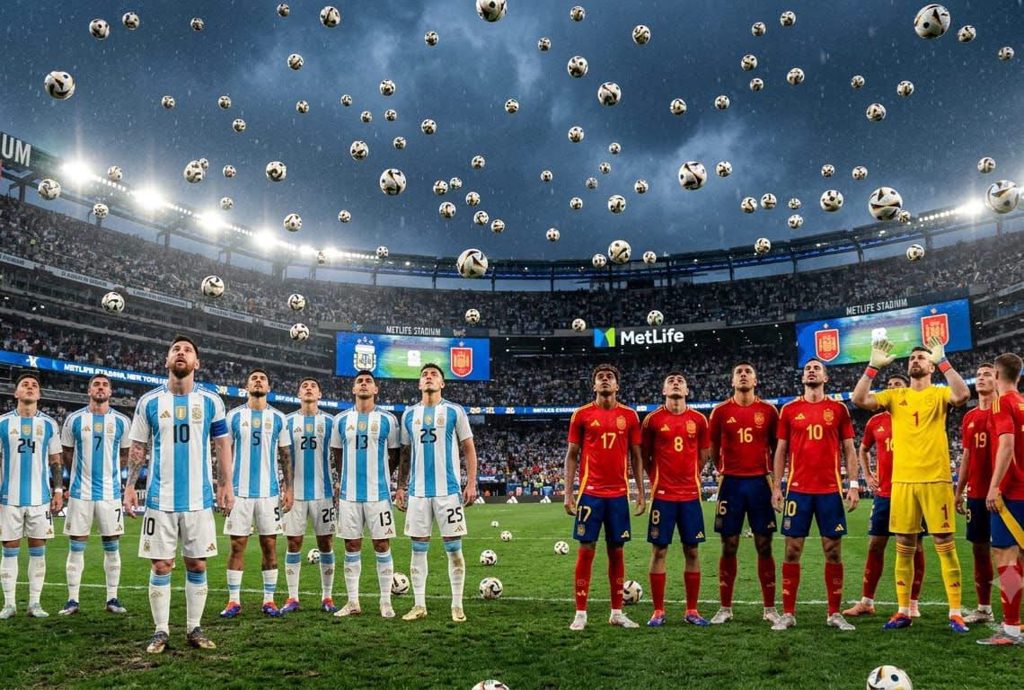
As the 2026 World Cup reaches its climax, Argentina’s run to the final has not only captivated the footballing world but has also etched their name into the history books of the tournament’s most prolific teams. With 19 goals in seven matches, Lionel Scaloni’s side has joined an elite list of attacking powerhouses that have defined World Cup history.
But where do they rank among the greatest goalscoring teams ever to grace the World Cup? Here is the definitive list of the most goals scored by a team in a single edition—from 1930 to 2026.
🥇 27 Goals – Hungary (1954) – 5 Matches
The record that still stands.
No team has ever scored more goals in a single World Cup than Hungary’s legendary “Magical Magyars” of 1954. Gusztáv Sebes’ side arrived in Switzerland unbeaten in four years—a run that included the famous 6-3 victory over England at Wembley in 1953, dubbed the “Match of the Century”.
Their goal-scoring spree began with a devastating 9-0 demolition of South Korea, followed by an 8-3 thrashing of West Germany in the group stage. The quarter-finals saw them put four past Brazil, and they repeated the feat against reigning champions Uruguay in the semi-finals.
Sándor Kocsis was the tournament’s top scorer with 11 goals—the second-most by a player in a single World Cup. Yet despite scoring 25 goals before the final—already surpassing Brazil’s previous record of 22 from 1950—Hungary fell to a miraculous West German comeback in the Bern final, losing 3-2.
Average: 5.4 goals per game
🥈 25 Goals – West Germany (1954) – 6 Matches
The champions who learned from defeat.
Remarkably, the second-most prolific team in World Cup history emerged from the very same tournament—and they were on the receiving end of Hungary’s 8-3 group-stage mauling.
West Germany bounced back spectacularly, beating Turkey 4-1 and then 7-2 in a play-off, before dispatching Yugoslavia 2-0 in the quarter-finals. A 6-1 demolition of Austria in the semi-finals set up a rematch with Hungary—and this time, the Germans prevailed 3-2 to lift their first World Cup.
Four different players scored at least four goals: Max Morlock (six), Helmut Rahn, Hans Schäfer and Ottmar Walter (four each).
Average: 4.2 goals per game
🥉 23 Goals – France (1958) – 6 Matches
Fontaine’s Golden Boot masterclass.
France’s 1958 side, featuring the legendary Just Fontaine, scored 23 goals in Sweden. Fontaine himself netted an astonishing 13 goals—a record for a single World Cup that still stands today.
The French opened with a 7-3 victory over Paraguay, followed by a 2-1 win against Scotland. After a 3-2 defeat to Yugoslavia, they recovered to beat Northern Ireland 4-0 in the quarter-finals. Though they lost 5-2 to Brazil in the semis, they finished third with a 6-3 triumph over West Germany.
Average: 3.8 goals per game
⚽ 22 Goals – Brazil (1950) – 6 Matches
The host nation’s heartbreak.
Brazil’s 1950 campaign—played on home soil—saw them score 22 goals in six matches. Ademir de Menezes was the tournament’s top scorer with nine goals. The Brazilians thrashed Sweden 7-1 and Spain 6-1 in the final group stage, but a shock 2-1 defeat to Uruguay in the decisive match handed the title to their South American rivals in what became known as the Maracanazo.
Average: 3.7 goals per game
⚽ 19 Goals – Brazil (1970) – 6 Matches
The beautiful game at its finest.
Pelé’s Brazil—widely regarded as the greatest team ever—scored 19 goals en route to their third World Cup title in Mexico. Jairzinho was the top scorer with seven, while Pelé contributed four. Their 4-1 victory over Italy in the final sealed the Jules Rimet trophy permanently.
Average: 3.2 goals per game
⚽ 19 Goals – Argentina (2026) – 7 Matches
The modern-day record-breakers.
Argentina’s 2026 campaign has seen them score 19 goals in seven matches—the most by any team since Brazil’s 1970 side. Lionel Messi leads the scoring with eight goals, supported by Lautaro Martínez (three), Cristian Romero (two), Enzo Fernández (two), and contributions from Julián Álvarez, Alexis Mac Allister, Lisandro Martínez and Giovani Lo Celso.
The defending champions have reached the final against Spain, with a chance to add to their tally. No team has scored so many goals in a World Cup edition since 1970.
Average: 2.7 goals per game
⚽ 18 Goals – Argentina (1930) – 5 Matches
The inaugural World Cup runners-up scored 18 goals in five matches, with Guillermo Stábile netting eight to finish as the tournament’s top scorer.
Average: 3.6 goals per game
⚽ 18 Goals – Brazil (2002) – 7 Matches
Ronaldo’s Brazil—champions in South Korea and Japan—scored 18 goals, with the striker himself netting eight, including both in the 2-0 final victory over Germany.
⚽ 18 Goals – Germany (2014) – 7 Matches
The 2014 champions scored 18 goals, highlighted by their historic 7-1 semi-final demolition of Brazil in Belo Horizonte.
⚽ 17 Goals – Austria (1954) – 5 Matches
Austria’s 1954 side, who finished third in Switzerland, scored 17 goals in just five matches.
⚽ 17 Goals – Portugal (1966) – 6 Matches
Eusébio’s Portugal scored 17 goals on their way to third place in England.
⚽ 17 Goals – West Germany (1970) – 6 Matches
Gerd Müller’s six goals helped West Germany score 17 and finish third in Mexico.
The Legacy
The 1954 World Cup remains the most prolific tournament in history, with both Hungary and West Germany occupying the top two spots. Hungary’s record of 27 goals—achieved in just five matches—has stood for over 70 years and appears unlikely to be surpassed.
As Argentina prepare for the 2026 final, they have already secured their place among the game’s greatest attacking sides—a fitting achievement for a tournament that continues to produce unforgettable footballing moments.
Statistics compiled from FIFA official records and Opta Analyst data.
Get the AfroAsia Media newsletter
The day's top stories from Africa and Asia, straight to your inbox.




Comments
0 comments
Loading…