
’The unbreakable pact’: Argentina vs Spain final to extend 96-year World Cup tradition
When the final whistle blows at MetLife Stadium on Sunday, one of world football’s most extraordinary traditions will remain intact. Whether Lionel Scaloni’s Argentina or Luis de la Fuente’s Spain lifts the trophy, the 2026 World Cup will be won by a homegrown coach – just as every one of the previous 22 tournaments has…
Published 3 min read
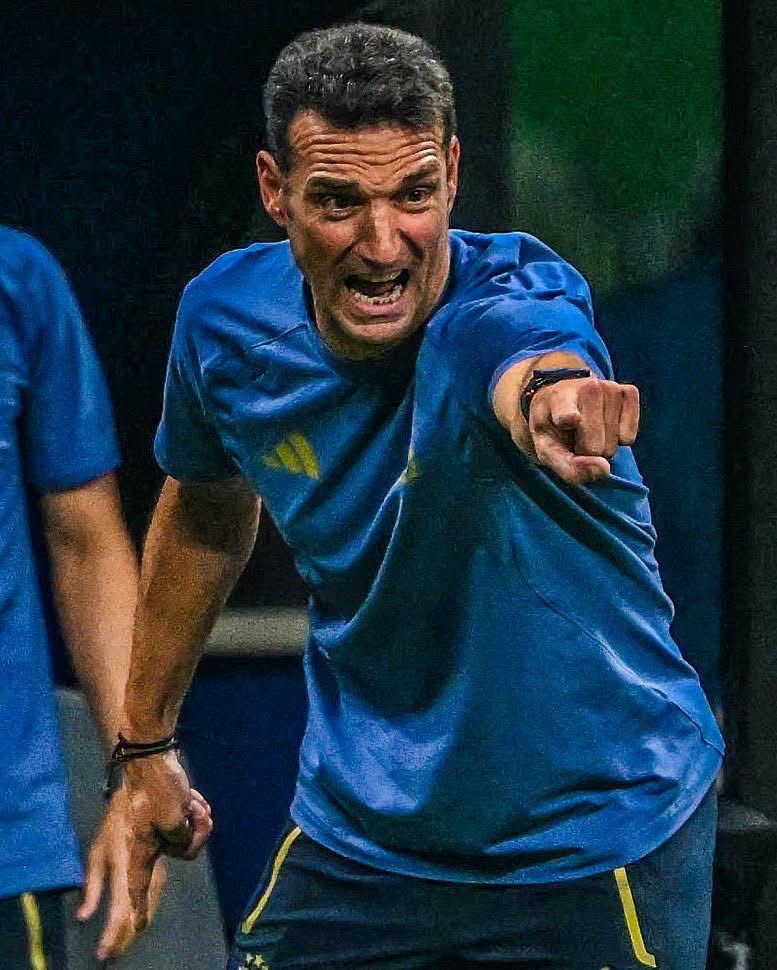
When the final whistle blows at MetLife Stadium on Sunday, one of world football’s most extraordinary traditions will remain intact. Whether Lionel Scaloni’s Argentina or Luis de la Fuente’s Spain lifts the trophy, the 2026 World Cup will be won by a homegrown coach – just as every one of the previous 22 tournaments has been.
Thomas Tuchel’s England came agonizingly close to breaking the 96-year-old sequence. The German tactician had his side 84 minutes into the semi-final, leading Argentina 1-0. Then Enzo Fernández struck in the 85th minute, Lautaro Martínez headed home in stoppage time, and England’s dream – along with Tuchel’s shot at history – evaporated.
A Record That Spans Nearly a Century
From the very first World Cup in 1930, when 31-year-old Uruguayan Alberto Suppici led the hosts to glory on home soil, every champion has been guided by a manager who shared the nationality of his players. Italy’s Vittorio Pozzo remains the only man to win twice, masterminding back-to-back triumphs in 1934 and 1938. Brazil’s five titles – from Vicente Feola in 1958 to Luiz Felipe Scolari in 2002 – have all come under Brazilian bosses. Argentina’s three crowns have been delivered by Argentine managers: César Luis Menotti in 1978, Carlos Bilardo in 1986, and Scaloni in 2022.
The list runs through every champion nation: Alf Ramsey for England in 1966, Aimé Jacquet for France in 1998, Vicente del Bosque for Spain in 2010, and Joachim Löw for Germany in 2014. Twenty-one different managers have lifted the trophy, and every single one led his own country’s national team.
The Finalists: Both Sides of the Tradition
Sunday’s final guarantees the streak continues. Scaloni, born in the small Santa Fe town of Pujato, is an Argentine through and through. He took over a fractured squad in 2018 and built a dynasty – Copa América titles in 2021 and 2024, a World Cup in 2022, and now a second final in four years.
De la Fuente, born in Haro, La Rioja in 1961, has spent 13 years rising through Spain’s federation ranks before taking the senior job in December 2022. He has already delivered a Nations League and a European Championship. Now he stands one win from joining del Bosque as a Spanish World Cup-winning manager.
The Exception That Proves the Rule
Tuchel wasn’t the first foreign coach to fall short, and he won’t be the last. This tournament alone saw Carlo Ancelotti’s Brazil, Roberto Martínez’s Portugal, and Mauricio Pochettino’s USA all eliminated before they could challenge the tradition. The German’s exit, however, stung the hardest – England had never been closer to ending 60 years of hurt, and a German manager had never been closer to rewriting history.
Some argue the pattern reflects the unique demands of international football. A national team coach must understand not only tactics but also the history, expectations, and emotions of an entire country. At the club level, foreign managers thrive. At the World Cup, the trophy has always stayed home.
One Final, One Certainty
When Scaloni or De la Fuente lifts the trophy on Sunday night, they will join an exclusive club that has remained unchanged for nearly a century. The 23rd World Cup will have its 22nd homegrown champion. And the world will wait at least another four years to see if anyone can finally break the unbreakable pact.
Get the AfroAsia Media newsletter
The day's top stories from Africa and Asia, straight to your inbox.




Comments
0 comments
Loading…