
Senegal in turmoil after FA President President reveals team doctor was gynecologist for a decade
Senegal’s football federation has been rocked by an extraordinary scandal after president Abdoulaye Fall disclosed that the national team’s head doctor, who served for 10 years, was actually a gynecologist and obstetrician by training — a revelation that has raised serious questions about player safety and institutional oversight. The stunning admission came during a press…
Published 3 min read
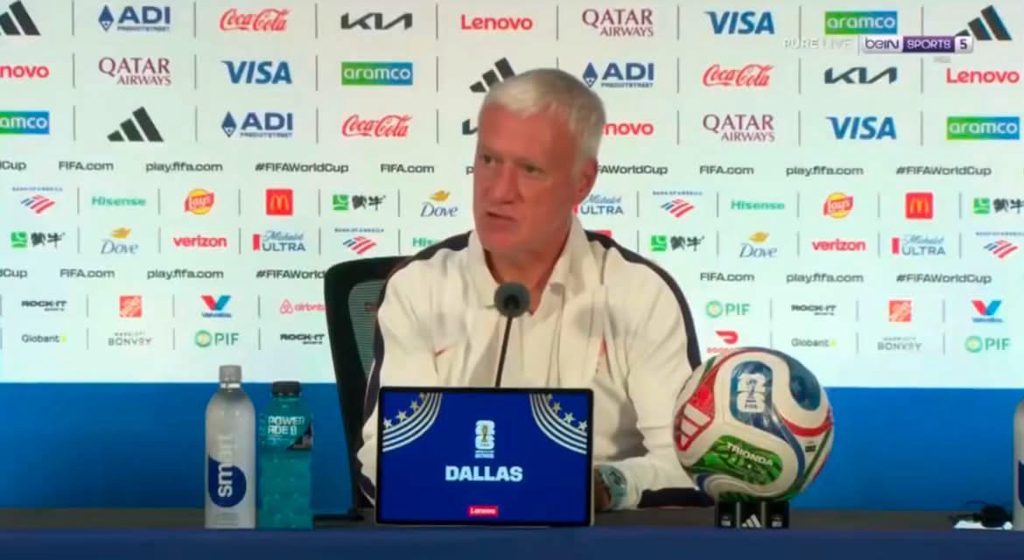
Senegal’s football federation has been rocked by an extraordinary scandal after president Abdoulaye Fall disclosed that the national team’s head doctor, who served for 10 years, was actually a gynecologist and obstetrician by training — a revelation that has raised serious questions about player safety and institutional oversight.
The stunning admission came during a press conference on Monday, where Fall publicly detailed the findings of a severe internal audit conducted after Senegal’s round-of-32 exit from the World Cup — a 3-2 extra-time defeat to Belgium. The disclosure prompted widespread shock and embarrassment across Senegalese football circles.
A Decade of Misplaced Trust
The doctor in question, identified by multiple reports as Dr. Fedior (also spelled Fadjour or Faye), had been the team’s chief physician for the past 10 years.
“I discovered too late that Dr. Fedior is a gynecologist and obstetrician by profession,” Fall told reporters. “In fact, our main doctor did not have the appropriate academic qualifications to supervise our players”.
Fall explained that he only learned of the doctor’s true specialty after the World Cup had concluded. The revelation emerged as part of a broader review of the federation’s operations, following what he described as a chaotic tournament plagued by internal dysfunction.
Players Lacked Confidence, Says President
According to Fall, the mismatch between the doctor’s specialty and the demands of elite sports medicine had not gone unnoticed by the squad.
“With the feedback we received, some players were not fully reassured,” Fall said. “At this level, and according to the comments I received, the players did not have full confidence to rely on him or to have him oversee their care on an ongoing basis”.
The president stressed that player welfare was paramount. “In the end, the players’ health comes before everything else,” he said, justifying the recruitment of a new team doctor — a Senegalese physician practicing in France with experience in French rugby and women’s football national teams.
A World Cup Plagued by Dysfunction
The medical scandal is just one of several issues Fall has laid bare. He also revealed that the federation never received a complete preparation program from the technical staff and had to organize friendly matches itself.
Logistical failures compounded the problems. The choice of a training camp in Raleigh, North Carolina, forced players into long journeys before their opening match in Charlotte. The team’s base camp in New Jersey, selected by the coach over a federation-proposed alternative, was described as wholly inadequate. “There weren’t even any wardrobes in the rooms. It wasn’t at all suitable for a national team,” Fall lamented. On one domestic flight between San Antonio and New Jersey, no meals were served to the players.
Coach Sacked, Full Powers Granted
The World Cup post-mortem has already claimed one high-profile casualty: head coach Pape Thiaw was dismissed along with his staff.
Fall, who became federation president in 2025, now holds full powers to overhaul the national team structure — from appointing a new technical staff to reorganizing operations across all levels.
Doctor’s Defense Emerges
Meanwhile, Dr. Fedior has reportedly pushed back against Fall’s characterization. According to some reports, the doctor has offered explanations that contradict the federation president’s account, though details of his response remain unclear.
For now, Senegalese football is left to grapple with an embarrassing saga that has laid bare deep institutional failures — and raised uncomfortable questions about how a gynecologist could serve as the chief medical officer of a World Cup team for an entire decade without anyone noticing.
Get the AfroAsia Media newsletter
The day's top stories from Africa and Asia, straight to your inbox.




Comments
0 comments
Loading…