
Redirect Diaspora remittances into productive sectors, Seth Terkper urges government
Presidential Advisor on the Economy and former Minister of Finance, Seth Terkper, has called for a strategic reassessment of diaspora remittances to ensure they contribute more directly to national development and economic transformation, rather than being largely absorbed by household consumption. Speaking at the launch of “Region 17” — an initiative recognising the Ghanaian diaspora…
Published 3 min read
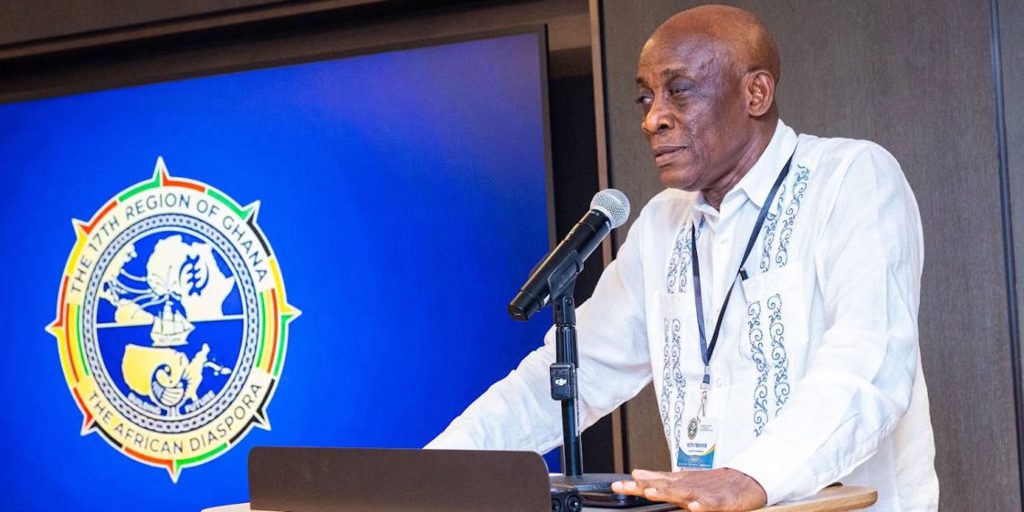
Presidential Advisor on the Economy and former Minister of Finance, Seth Terkper, has called for a strategic reassessment of diaspora remittances to ensure they contribute more directly to national development and economic transformation, rather than being largely absorbed by household consumption.
Speaking at the launch of “Region 17” — an initiative recognising the Ghanaian diaspora as a virtual region — under the theme “Harnessing the Power of the Diaspora to Transform Ghana’s Future,” Mr Terkper said remittances from Ghanaians abroad have become an increasingly vital source of financing for the economy . This comes at a critical time when Ghana and other African nations face shrinking access to concessional loans and grants amid shifting global financing conditions .
Remittances at Record Highs
Mr Terkper’s intervention comes as official data reveals the scale of diaspora contributions. President John Dramani Mahama disclosed in May 2026 that Ghanaians living abroad sent home a record US$7.8 billion in 2025 — a figure exceeding the total economic output of several of Ghana’s administrative regions . The inflows now account for roughly six per cent of GDP, surpassing foreign direct investment and underlining their systemic importance to the country’s external stability .
The Bank of Ghana has also reported that remittances rose from approximately US7.8 billion by the end of 2025, with the United States remaining the largest single source of inflows .
Beyond Household Support
Mr Terkper argued that Ghana must look beyond the traditional understanding of remittances as money sent mainly to support families and examine their wider economic value . He noted that diaspora funds already contribute to housing development, business creation, investment activities, and the transfer of skills and products into the country .
“We need to diagnose the nature of remittances and how they can benefit Ghana’s development,” he stated .
He emphasised that countries moving into higher income classifications must increasingly rely on domestic resources and alternative financing options, making it imperative to develop policies that encourage more productive use of diaspora capital .
Lessons from the ‘African Lions’
The former Finance Minister drew lessons from the rise of so-called African Lions, noting that several African economies have demonstrated strong growth despite difficult global conditions . He argued that Ghana could similarly position itself for transformation by leveraging its human capital, diaspora resources, and domestic economic opportunities .
However, Mr Terkper acknowledged that Ghana’s recent debt challenges and subsequent defaults had affected investor confidence, stressing that restoring trust would require consistency in economic management and policies that encourage both domestic and diaspora investors .
Policy Momentum Grows
Mr Terkper’s call aligns with broader policy discussions on channelling remittances into productive investment. The Bank of Ghana is exploring diaspora bonds and structured investment vehicles to mobilise overseas inflows for infrastructure, SMEs, and other priority sectors . Central Bank Governor Dr Johnson Pandit Asiama has described the diaspora as “central to our external stability, our investment strategy and our economic transformation agenda” .
Legal scholar Prof. Stephen Kwaku Asare has similarly proposed a framework including diaspora bonds, SME investment funds, agricultural vehicles, and infrastructure funds to redirect a portion of remittance inflows from consumption into jobs, enterprises, and shared prosperity .
The launch of Region 17 forms part of broader efforts to strengthen engagement with the Ghanaian diaspora and explore ways to leverage their networks, expertise, and financial resources to accelerate the country’s socio-economic development .
Get the AfroAsia Media newsletter
The day's top stories from Africa and Asia, straight to your inbox.




Comments
0 comments
Loading…