
Rate Cuts to Stay on Hold as BoG Sees Inflation Rising
Bank of Ghana Governor Dr. Johnson Pandit Asiama has sent a clear signal to Parliament: with inflation gradually climbing back toward the target band, the central bank will not resume rate cuts in…
Journalist
Published 4 min read
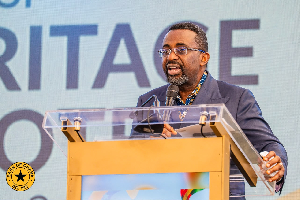
Bank of Ghana Governor Dr. Johnson Pandit Asiama has sent a clear signal to Parliament: with inflation gradually climbing back toward the target band, the central bank will not resume rate cuts in the near term. The stance sets the tone for the upcoming Monetary Policy Committee (MPC) meeting on November 16–18, where holding the policy rate at 14.0% is now widely expected.
Inflation Rises for Fourth Straight Month as Services Pressure Mounts
Data from the Ghana Statistical Service shows headline inflation rose to 5.5% in October 2026, up from 5.2% in September—the fourth consecutive monthly increase and an 11-month high. Although the rate remains below the central bank's medium-term target band of 6% to 10%, the upward trend has kept policymakers cautious.
Structural pressures are particularly pronounced. Services inflation surged to 11.5% in October, breaching the upper limit of the target band, while non-food inflation jumped from 6.2% in September to 7.9%, contributing roughly 76% of overall inflation. Transport prices rose 8% month-on-month and 14.1% year-on-year, making them the single largest driver of price pressures. Food inflation, by contrast, fell to 2.8% on the back of a bumper staple harvest—a stark contrast.
Governor Tells Parliament: Caution Rooted in Three External Risks
Testifying before Parliament's Committee on Economy and Development, Asiama explicitly listed three external risks keeping the central bank cautious: international crude oil prices persistently above $100 per barrel, the rate-hiking cycles of the US Federal Reserve and the European Central Bank, and the potential impact of a strong El Niño phenomenon on domestic food supply.
"We expect inflation to enter the target band in the coming quarters, but the timing depends on the evolution of domestic and external price pressures," Asiama said. He stressed that monetary policy "responds to evolving prospects rather than following a preset path."
The cautious stance has context. The central bank cut rates by 250 and 150 basis points in January and March respectively, bringing the policy rate down from 18% to 14%. But since May, Middle East conflict driving oil prices higher and utility tariff adjustments have forced the MPC to hold steady at three consecutive meetings.
Earlier Easing Delivered Results, but Reserve Pressures Loom
The decision to pause is built on the substantive gains already achieved through prior easing. As of June, average lending rates had fallen from 27.0% a year earlier to 15.6%, the 91-day Treasury bill rate had plunged from 14.7% to 5.3%, and private sector credit growth had risen to 41.2%.
Economic growth provides further support: real GDP grew 6.4% in the first quarter and 6.0% in the second; the trade surplus reached $8.81 billion in the first half, with a current account surplus of $5.1 billion; and the fiscal deficit stood at just 0.4% of GDP, well below the 2.0% target.
Yet the composition of foreign reserves presents a concern. Gross international reserves fell from $13.8 billion (5.7 months of import cover) at end-2025 to $11.07 billion (4.2 months) at end-August, recovering to $12.05 billion (4.5 months) on September 22. The Ghana Accelerated National Reserves Accumulation Programme (GANRAP), launched by the central bank in April, targets 15 months of import cover by 2028—a significant gap remains between current progress and that goal.
The cedi is also under pressure. After appreciating 40.7% over the whole of 2025, the cedi depreciated 7.9% against the dollar in the first half of this year, accumulating a 9.5% loss by September 18. Asiama attributed this to energy-related import payments, dividend remittances, and reduced global risk appetite.
Market Consensus: Hold Steady, Await Budget Signals
Analysts broadly expect the MPC to keep rates unchanged. IC Group said in its latest research note that it expects November inflation to rise further to 5.8% before easing to 5.3% in December on base effects, and that the central bank "will allow time to assess fiscal risk signals in the upcoming 2027 budget."
Asiama himself places heavy weight on managing inflation expectations. "Managing inflation expectations is as important as the policy rate itself," he told the parliamentary committee. With inflation still some way from returning to the target band and external risks continuing to accumulate, the Bank of Ghana's rate-cut window—at least this November—remains firmly shut.
Background: Dr. Asiama was appointed Governor of the Bank of Ghana by President Mahama on February 25, 2025. He holds a PhD in Economics from the University of Southampton and has served in the central bank system for more than 23 years, including as Second Deputy Governor from 2016 to 2018.
Get the AfroAsia Media newsletter
The day's top stories from Africa and Asia, straight to your inbox.
Comments
0 comments
Loading…