
New GH¢1 Note Celebrates Market Women and Their Role in Ghana’s Independence
The Bank of Ghana has placed a market woman at the heart of the nation’s currency, unveiling a redesigned GH¢1 note honouring Agnes Oforiwa Tagoe-Quarcoopome, the Makola trading queen who mobilised…
Journalist
Published 3 min read
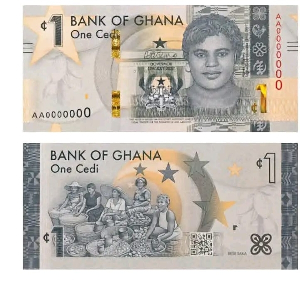
The Bank of Ghana has placed a market woman at the heart of the nation’s currency, unveiling a redesigned GH¢1 note honouring Agnes Oforiwa Tagoe-Quarcoopome, the Makola trading queen who mobilised women traders to finance Kwame Nkrumah’s independence campaign.
The note, part of the broader Ghana Cedi Heritage Series launched by President John Dramani Mahama on November 12, 2026, enters circulation on December 1 alongside existing banknotes, which remain legal tender . It represents the most significant redesign of the cedi since the 2007 redenomination .
A Life That Shaped a Nation
Born on May 27, 1913, Agnes Oforiwa Tagoe-Quarcoopome—affectionately known as “Auntie Oforiwa”—was forced to end her formal education early due to financial constraints, turning instead to trading between 1921 and 1929 . By the 1940s, she had become one of the Gold Coast’s most respected traders, operating shops at Makola and Okaishie in Accra .
Her influence extended far beyond commerce. When Nkrumah returned from the United Kingdom and needed lodging, he stayed briefly at her Asylum Down home . After the Convention People’s Party (CPP) was formed in 1949, Tagoe-Quarcoopome single-handedly rallied Makola market women behind Nkrumah, organising meetings in marketplaces and persuading traders to finance CPP activities . Through her efforts, the CPP received substantial funding from market women who believed in Nkrumah’s vision .
She also broke barriers in formal finance. At a time when wealthy Makola women typically kept their earnings in home safes, she became the first market woman to open a bank account with Standard Bank of West Africa—now Standard Chartered Bank Ghana—on the advice of a United Africa Company executive . Her example encouraged other traders to trust formal banking institutions .
Her loyalty to Nkrumah carried personal cost. After the 1966 coup that overthrew him, she was taken into custody by soldiers in the middle of the night and later released by General Joseph Arthur Ankrah . She died on July 7, 1997, at age 84 .
The Design: Commerce, Makola, and Bese Saka
The front of the note bears an intaglio portrait of Tagoe-Quarcoopome, while the reverse depicts Makola Market—the historic commercial heart of Accra, built in 1924 and long dominated by women traders from the Ga community . The pairing is deliberate: the individual trader personifies the wider community of indigenous market women, while the market represents the institution within which that enterprise took shape .
The note also features the Adinkra symbol Bese Saka, depicting a sack of cola nuts, which symbolises affluence, abundance, togetherness, and unity—a nod to the role of agriculture and trade in bringing communities together .
Like other denominations in the Heritage Series, the new GH¢1 note is printed on reinforced cotton paper, designed to withstand Ghana’s climate and frequent handling, and is smaller and more portable than its predecessor .
A Broader Heritage Series
The GH¢1 note is one of eight denominations in the Heritage Series, which features national figures, historic sites, and cultural symbols across the GH¢1 to GH¢200 range . At the launch, Bank of Ghana Governor Dr. Johnson Pandit Asiama said the notes incorporate enhanced security features to combat counterfeiting, and announced plans for a new Currency Act to replace the 1964 legislation .
President Mahama, speaking at the Bank Square ceremony, traced the cedi’s lineage to cowrie shells and gold dust, and invoked the Adinkra symbol of two crocodiles sharing one stomach. “The cedi passes through countless hands,” he said. “It rests in the palm of the kayayei in Makola and in the hands of the fishermen in Elmina… The cedi knows no political party” .
For Ghanaians, the new GH¢1 note will serve as a daily reminder of a woman whose commercial acumen and political conviction helped finance a nation’s birth—a story, as the Bank of Ghana’s Dominic Owusu put it, that “starts from commerce” .
Get the AfroAsia Media newsletter
The day's top stories from Africa and Asia, straight to your inbox.
Comments
0 comments
Loading…