
NALAG pushes for elected MMDCEs, four-year Presiding Members in sweeping decentralisation reform
The National Association of Local Authorities of Ghana (NALAG) has submitted far-reaching proposals to the Constitutional Review Committee, calling for the direct election of Metropolitan, Municipal…
Journalist
Published 4 min read
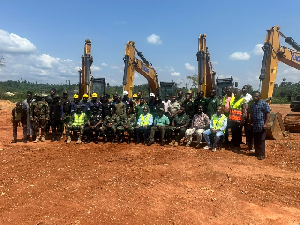
The National Association of Local Authorities of Ghana (NALAG) has submitted far-reaching proposals to the Constitutional Review Committee, calling for the direct election of Metropolitan, Municipal and District Chief Executives (MMDCEs) and their redesignation as Mayors, as part of a broader push to deepen decentralisation and make local leaders more accountable to citizens.
The proposals, outlined at NALAG’s 2026 Regional Delegates Conference in the Western Region under the theme “Local Actions for National Impact,” also seek to extend the tenure of Presiding Members from two to four years, introduce their election by simple majority, and charge the emoluments of both Presiding Members and Assembly Members to the Consolidated Fund.
The address, delivered on behalf of NALAG President Alfred Asiedu Adjei by Western Regional Representative Percy Ahenakwah, argued that effective decentralisation must go beyond transferring administrative duties to local authorities and must guarantee genuine democratic participation and institutional continuity.
A long road to local democracy
The proposals strike at the heart of Ghana’s local governance architecture, which has remained largely unchanged since the 1992 Constitution enshrined the President’s power to appoint MMDCEs subject to assembly approval. Under Article 243(1), MMDCEs are appointed by the President with a two-thirds majority of assembly members present and voting—a system critics say leaves local executives owing their allegiance to Accra rather than to their own communities.
Ghana’s decentralisation journey began in earnest in 1988 under PNDCL 207, which established District Assemblies as the focus of local government. The 1992 Constitution further entrenched this by making District Assemblies the highest political authority at the local level, and today there are 261 Metropolitan, Municipal and District Assemblies (MMDAs). Yet true political autonomy remains elusive: local governments still rely heavily on centrally appointed officials, and key decisions on budgeting and personnel are heavily influenced by national ministries.
Successive governments have pledged to reform the system. President John Mahama promised in the 2012 NDC manifesto to involve citizens directly in electing MMDCEs, while the NPP’s 2017 manifesto pledged to oversee direct elections by 2019. A Constitutional Amendment Bill was introduced in 2018 but stalled, and the current Constitutional Review Committee—chaired by Professor H. Kwasi Prempeh—has been examining the issue as part of a wider national review.
Welfare of Assembly Members
Beyond constitutional reform, Adjei disclosed that NALAG’s National Executive Council had engaged government to settle outstanding allowances for Assembly Members, announcing that arrears for the second and third quarters had recently been paid.
The welfare issue has been a persistent concern. In February 2026, NALAG welcomed the full payment of 2025 monthly allowance arrears, describing it as a “significant milestone” that restored morale among Assembly Members. However, delays have continued into 2026, with the Deputy Local Government Minister, Rita Odoley Sowah, assuring members in June that first-quarter payments were being processed by the Controller and Accountant-General’s Department.
NALAG has also pushed for a more formalised payment system. Eastern Regional Representative Nana Yaw Debrah, who is also Presiding Member for New Juaben South, urged that the allowances be backed by a Legislative Instrument to guarantee regular payment regardless of which government is in power.
Building institutions and communities
Adjei said the Association was also pursuing institutional strengthening and practical development interventions beyond constitutional advocacy. Through the Partnership for Municipal Innovation – Women in Local Leadership (PMI-WILL), implemented with the Federation of Canadian Municipalities (FCM) and supported by Global Affairs Canada, NALAG developed a Five-Year Strategic Plan and key institutional policies covering human resource management, procurement, finance, operations, advocacy, gender and communications.
The PMI-WILL project, which formally concluded in September 2026, also delivered tangible community infrastructure: a maternity block and laboratory at Nyamoase in the Atebubu-Amantin Municipality, a kindergarten block at Asuboni Rails in the Kwahu West Municipality, a neonatal block at Tema Manhean Clinic, and the renovation of a CHPS compound at Lifur in the Saboba District.
NALAG has additionally distributed 320,000 exercise books to pupils across all 261 MMDAs, an initiative launched under the theme “Local Governance for Educational Transformation”.
Western Region elects national representative
At the Western Regional conference, Mr Stephen Angu Kuma was elected unopposed to represent the region at the Association’s national level, ahead of national elections scheduled for February 2027.
Adjei urged delegates across the regions to use the conferences to strengthen NALAG’s democratic structures and develop practical responses to the challenges confronting local government administration. National development, he said, would be more “meaningful and sustainable when local institutions were effective, local leaders were accountable and communities experienced tangible improvements in their living conditions”.
Get the AfroAsia Media newsletter
The day's top stories from Africa and Asia, straight to your inbox.
Comments
0 comments
Loading…