
NACOC Arrests 58-Year-Old at Kotoka with 58 Cocaine Pellets Swallowed Before India Flight
The Narcotics Control Commission (NACOC) has arrested a 58-year-old man at Kotoka International Airport after he was allegedly found to have swallowed 58 pellets suspected to contain cocaine, in an…
Journalist
Published 4 min read
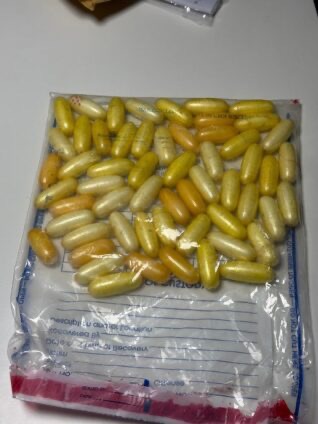
The Narcotics Control Commission (NACOC) has arrested a 58-year-old man at Kotoka International Airport after he was allegedly found to have swallowed 58 pellets suspected to contain cocaine, in an apparent attempt to smuggle the drug to India.
The suspect was intercepted on Monday, November 16, 2026, during NACOC’s routine passenger pre-screening operations as he prepared to board a flight to India. A subsequent examination confirmed he had ingested the pellets in an effort to conceal the narcotic substance and transport it across international borders.
Photographs released by the Commission showed yellowish, capsule-shaped pellets laid out on brown paper alongside a weighing scale displaying a reading of 1.05. The Commission said the arrest followed passenger profiling and intelligence-led surveillance designed to identify travellers suspected of involvement in drug trafficking.
The suspect is expected to be arraigned before court as investigations continue.
A Body-Packer’s Gamble
Body packing—the internal concealment of narcotics—remains one of the most dangerous methods used by drug couriers, known in enforcement circles as “mules.” Pellets are typically swallowed or inserted rectally or vaginally, and rupture can cause fatal overdose. NACOC has warned repeatedly that such methods are detectable and that carriers face severe penalties under Ghana’s narcotics laws.
The arrest mirrors a 2021 case in which Kwadwo Fosu was intercepted at Kotoka during profiling and confessed to swallowing drug pellets destined for Spain in exchange for €2,000. In 2020, a taxi driver was arrested after expelling 100 pellets following quarantine.
A Reputation Under Siege
The Kotoka arrest lands at a particularly sensitive moment for Ghana’s international image. Between March 2025 and September 2026, the country was linked to at least 11 reported cocaine seizures—seven within Ghana and four abroad involving consignments that had departed from or passed through the country, according to a JoyNews Research tally.
The most consequential of these was the September 10, 2026, seizure of nearly 3.9 metric tonnes of cocaine at the Port of Dunkirk in northern France. French customs valued the haul at approximately €225 million (roughly US$261 million), concealed inside a shipping container filled with plastic waste that had originated from Ghana.
That was followed in November 2026 by the interception of 2.6 tonnes of cocaine hidden in a coconut shipment from Ghana at a Spanish port. Separately, a Syrian national was arrested at Beirut’s Rafic Hariri International Airport carrying 46.7 kilogrammes of cocaine on a flight from Accra—a case that prompted a security think tank to question whether the shipment represented a “controlled delivery” or a catastrophic failure at Kotoka.
The opposition New Patriotic Party (NPP) has claimed that between March 2025 and October 2026, Ghana recorded no fewer than 14 major drug busts, with cocaine seized abroad alone carrying an estimated street value of between US$1.3 billion and US$1.7 billion.
Political Fallout
The Dunkirk seizure triggered immediate political consequences. The Minority in Parliament, led by First Deputy Minority Whip Habib Iddrisu, petitioned Parliament to investigate the circumstances surrounding the seizures and the country’s response to drug trafficking. Minority Leader Alexander Afenyo-Markin cited the Dunkirk haul among incidents raising alarm and warned that Ghana risks losing a generation to drug abuse.
Speaker Alban Bagbin blocked the proposed parliamentary inquiry, prompting the Minority to file a formal motion seeking a review of his ruling.
President John Dramani Mahama convened an emergency meeting with security chiefs at Jubilee House on September 17, 2026, and directed the formation of an inter-agency task force to develop a roadmap for preventing narcotics trafficking through Ghana’s borders. The Chronicle newspaper, in a blunt editorial published on the same day as the Kotoka arrest, warned that “the real test of leadership is not the number of meetings convened or directives issued,” but whether those directives produce measurable improvements in detection, prevention and prosecution—and urged authorities to pursue “the financiers, organisers and influential individuals who facilitate these criminal networks”.
NACOC’s Pledge
NACOC said it would continue to strengthen surveillance and enforcement at Ghana’s entry and exit points, working with national and international partners to dismantle trafficking networks. The Commission cautioned prospective traffickers against attempting to evade law enforcement by concealing or ingesting narcotic substances, saying such methods would be detected.
For a country whose export routes have repeatedly surfaced in multi-tonne cocaine interceptions on three continents in a matter of months, the arrest of a single body-packer at Kotoka is both a routine enforcement success and a reminder of the scale of the challenge.
Get the AfroAsia Media newsletter
The day's top stories from Africa and Asia, straight to your inbox.
Comments
0 comments
Loading…