
Minerals Commission Pledges Full Support for Women in Mining and Transport
The Minerals Commission has thrown its weight behind a new push to open Ghana’s mining and transport sectors to women, with a senior official declaring that “competence, not gender, must be the…
Journalist
Published 3 min read
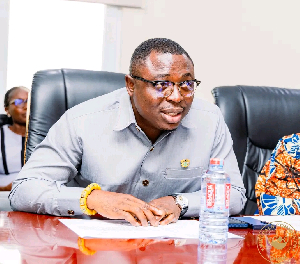
The Minerals Commission has thrown its weight behind a new push to open Ghana’s mining and transport sectors to women, with a senior official declaring that “competence, not gender, must be the defining factor for participation and success.”
Deputy Chief Executive Officer (Support Services) Emmanuel Kwamena Anyimah gave the assurance on Friday at the launch of the Empowering Women in Mining and Transport Project in Accra, where he represented Chief Executive Officer Isaac Andrews Tandoh. The Commission’s message, he said, was “clear and unwavering: it stood with every woman ready to take her rightful place” in the two male-dominated industries.
Anyimah urged women from all backgrounds and regions to embrace the opportunities emerging in the sectors, and called on mining companies, development partners, training institutions and other stakeholders to treat women’s inclusion as “a key pillar of local content development”—a commitment he said was necessary to build “a Ghana that works for all”.
A Sector Still Far From Parity
The launch comes against a stark gender gap in Ghana’s extractive workforce. Women account for only 9 to 10 per cent of the large-scale mining workforce, 9 per cent of the contractor workforce, 10 per cent of junior-level roles, 14 per cent of senior positions and 21 per cent of professional roles, according to Ghana Chamber of Mines data cited by the Minerals Income Investment Fund (MIIF). In artisanal and small-scale mining, a 2026 study found that discriminatory factors explain roughly 71.7 per cent of the observed gender income gap, with women largely confined to ore sorting, food vending and other lower-paid roles while men dominate technical and physically demanding work.
The Minerals Commission has already begun to address the imbalance through policy. Ghanaian legislation requires mining firms to demonstrate gender parity through localisation plans submitted to the Commission, and the regulator is pushing to move women beyond clerical positions into technical and managerial roles. The Commission has also run skills programmes for women in host mining communities, including an initiative in Fomena in the Ashanti Region that trained more than 200 participants from 19 communities. Separately, MIIF’s Women from Mining Communities (WoMCom) Scholarship Scheme has supported over 90 young women studying science, technology, engineering and mathematics at the University of Mines and Technology, Tarkwa.
A Regulator With a Broader Mandate
Anyimah, popularly known as “Ellembelle KK,” was appointed Deputy CEO by President John Mahama in February 2025, bringing a background in environmental health and safety, engineering and quality assurance to the role. He has since become a prominent voice in the Commission’s anti-galamsey operations and its push for value retention, arguing that Ghana’s mining success must be measured not only by export volumes but by how much wealth stays in the country.
His latest intervention places gender inclusion squarely within that broader local-content agenda. By asking companies and training institutions to prioritise women, the Commission is signalling that the next phase of Ghana’s mining governance will be judged partly on who gets to participate—and at what level.
For now, the Empowering Women in Mining and Transport Project has the regulator’s public backing. The test will be whether that backing translates into measurable shifts in hiring, training and promotion across a sector where women remain a small minority of the formal workforce.
Get the AfroAsia Media newsletter
The day's top stories from Africa and Asia, straight to your inbox.
Comments
0 comments
Loading…