
Mahama questions Ghana’s US$3bn annual food import bill, urges major shift to local production
President John Dramani Mahama has questioned why Ghana continues to spend approximately US$3 billion annually importing food products such as rice, poultry and sugar when the country has the land…
Journalist
Published 8 min read
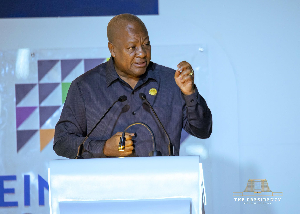
President John Dramani Mahama has questioned why Ghana continues to spend approximately US$3 billion annually importing food products such as rice, poultry and sugar when the country has the land, resources and capacity to produce more of its own food.
He says the continued dependence on imported food is draining economic value from the country, limiting opportunities for local farmers and businesses, and undermining efforts to create jobs through agriculture and agro-processing.
Speaking at the West Africa Integration and Investment Summit (WAIIS) in Freetown, Sierra Leone, on Wednesday, November 18, 2026, President Mahama called for a stronger commitment to domestic food production, arguing that Ghana must retain more of the money spent on food within its own economy.
He particularly questioned the country’s dependence on imported poultry, recalling a period when households across Ghana commonly raised chickens for domestic consumption.
“I can use the example of Ghana. We import $3 billion worth of food products a year, including rice, poultry and chicken. When we were young, the chickens were all over the house, running all over. If it was time to eat chicken, our mothers and fathers would commission us to chase one of the fowls and bring it. We were self-sufficient in chicken. Who needed to import chicken?” he asked.
The President argued that the continued purchase of foreign food transfers economic opportunities and wealth to producers outside Ghana instead of supporting domestic businesses.
“Anytime we eat that foreign rice, or we eat the foreign chicken, we’re exporting value and importing poverty,” he said.
He drew on a similar argument by African business magnate Aliko Dangote, who has repeatedly advocated stronger African production capacity and reduced dependence on imported goods.
Food import figures underline the challenge
President Mahama’s comments highlight a long-standing challenge facing Ghana’s agricultural sector: the gap between the country’s considerable agricultural potential and its ability to meet domestic demand for key food commodities.
Data from the Ghana Statistical Service’s 2025 Annual International Merchandise Trade Statistics Report show that Ghana spent GH¢36.46 billion on food and agricultural imports during the year.
That figure is equivalent to approximately US$2.9 billion using the average exchange rate for 2025, under the broad customs classification covering food and agricultural products.
The category includes cereals, meat, fish, oils, sugar and other food products, as well as some items such as beverages, tobacco and animal feed. The exact total therefore depends on the products included in the definition of food imports.
Processed cereal grains accounted for GH¢2.94 billion of the 2025 import bill, while frozen chicken imports cost GH¢2.84 billion.
Semi-milled or wholly milled rice imports were valued at GH¢2.39 billion, with broken rice accounting for another GH¢1.19 billion.
The figures demonstrate the scale of Ghana’s reliance on foreign supplies for commodities that are also produced locally.
The Finance Minister, Dr Cassiel Ato Forson, also drew attention to the country’s food import expenditure during the presentation of the 2027 Budget, putting the annual figure at approximately US$3.5 billion.
The different estimates reflect variations in the reporting period and the range of products included in the calculations. The central concern, however, remains the substantial amount of foreign exchange Ghana spends on food and agricultural products.
Poultry industry faces import competition
Poultry is one of the sectors at the centre of the government’s import-substitution ambitions.
Ghana continues to import large quantities of frozen chicken to meet domestic demand, despite having local poultry farmers and businesses capable of producing chicken.
According to customs data, poultry meat and offal imports were valued at approximately US$232.4 million in 2025, up from US$183.2 million in 2024.
The figures have intensified calls for investment in local poultry production, particularly in the production of maize and soybean, which are essential ingredients in poultry feed.
The Finance Minister recently questioned why Ghana should continue spending about US$200 million annually importing chicken when local farmers could be supported to expand production.
A major challenge facing the domestic poultry industry has been the cost of feed, which accounts for a substantial share of production expenses.
Limited access to affordable finance, inconsistent supplies of quality feed, disease management costs, processing capacity and competition from imported frozen chicken have also constrained the growth of local producers.
Industry players have repeatedly called for improved access to credit, reliable markets, modern processing facilities and policies that give locally produced chicken a stronger position in the domestic market.
Government plans US$3bn commercial agriculture investment
President Mahama’s comments come shortly after the government announced plans to invest US$3 billion in commercial agriculture as part of its broader economic transformation agenda.
The initiative, outlined in the 2027 Budget, is expected to focus on building a more commercially organised agricultural sector capable of supplying local industries, reducing food imports and expanding exports.
The programme will target eight integrated agricultural industries:
Rice production
Sugar
Poultry
Maize and soybean for animal feed
Aquaculture
Oil palm
Vegetables
Cocoa value addition
According to the government, the programme will connect farmers to improved seeds and animal breeds, irrigation, mechanisation, extension services, secure land and water resources, financing and organised markets.
It will also support storage, processing, packaging, transportation and distribution to address weaknesses across the agricultural value chain.
The government says the investment is intended to move agriculture away from fragmented production towards a commercially driven system in which farmers have access to reliable markets and processors have a consistent supply of raw materials.
The US$3 billion commitment forms part of the wider New Economy Programme, which the government has presented as a major investment drive to stimulate growth, industrial development and employment.
Rice imports targeted for reduction
Rice is another major component of Ghana’s food import bill and a priority area under the commercial agriculture plan.
Despite the presence of rice-producing communities across the country, imported rice continues to dominate significant sections of the domestic market.
The 2025 trade figures show that Ghana spent more than GH¢3.5 billion importing semi-milled or wholly milled rice and broken rice combined.
The government has announced plans to link commercial rice import licences to purchases from verified local farmers and millers from 2027.
Under the proposed arrangement, importers would be required to demonstrate support for domestic production, with local purchasing requirements expected to increase as the country’s production capacity expands.
The government has also announced an ambition to prohibit commercial rice imports by 2030, subject to the expansion of domestic production, milling, storage, quality assurance and distribution capacity.
The policy is intended to create a dependable market for local rice farmers while encouraging investment in modern milling and processing facilities.
However, achieving the target will depend on whether local producers can supply rice in sufficient quantities and at competitive prices while meeting the quality standards demanded by consumers.
Feed Ghana programme and agricultural transformation
The planned commercial agriculture investment builds on the government’s Feed Ghana Programme, launched in April 2025 as part of its Agriculture for Economic Transformation Agenda.
The four-year programme, covering 2025 to 2028, seeks to increase food production, improve agricultural productivity, strengthen livestock and poultry production, and expand the infrastructure needed to support farming.
It is also designed to address challenges such as limited access to affordable financing, low productivity, inadequate irrigation, post-harvest losses and weak links between farmers and markets.
Agriculture remains a major part of Ghana’s economy, contributing approximately 20 per cent of gross domestic product and employing close to 40 per cent of the workforce, according to the government’s 2027 Budget.
The sector also contributes significantly to export earnings, but its potential to generate more jobs and industrial growth remains constrained by low productivity and limited value addition.
The government argues that a stronger agricultural sector could supply raw materials to local factories, reduce pressure on foreign exchange reserves and help stabilise food prices.
The challenge of turning ambition into production
While the President’s call for greater local production has renewed attention on Ghana’s food import dependence, the success of the proposed interventions will depend on addressing structural problems within the agricultural sector.
Farmers continue to face challenges involving access to affordable credit, quality seeds, fertilisers, irrigation, mechanisation and reliable markets.
Post-harvest losses, inadequate storage facilities, poor rural roads and limited processing capacity also reduce the value of agricultural produce and discourage investment.
For poultry farmers, the availability and cost of locally produced maize and soybean will be particularly important. Increasing chicken production without addressing feed costs could leave domestic producers unable to compete with imported products.
Rice farmers, meanwhile, need access to improved varieties, irrigation, modern harvesting equipment, storage and reliable milling facilities if they are to supply the market consistently.
The government will also have to ensure that policies designed to protect local producers do not create shortages or cause food prices to rise before domestic production can meet demand.
President Mahama’s remarks therefore place renewed emphasis on the need to make agriculture a commercially viable business rather than relying solely on calls for consumers to buy locally produced food.
The broader objective, he says, is to ensure that money spent on food creates jobs, supports Ghanaian businesses and strengthens the country’s productive capacity.
Reducing the food import bill would not only improve Ghana’s trade position but could also stimulate investment in farming, transportation, storage, packaging and food processing.
For the government, the challenge is now to translate the country’s agricultural potential and the planned US$3 billion investment into measurable increases in production, lower food imports and better incomes for farmers.
Sources and additional context: The President’s remarks were reported by Citi Newsroom on November 18. The Ghana Statistical Service import figures were reported by Graphic Online, while the government’s commercial agriculture investment and targets were outlined in the 2027 Budget and reported by the Ghana News Agency. Mahama +4
Publication note: I have retained the President’s US$3 billion figure as his stated estimate, while adding the GSS’s 2025 figure and explaining why the totals may differ. This avoids presenting the two estimates as if they were calculated using exactly the same definition.
Get the AfroAsia Media newsletter
The day's top stories from Africa and Asia, straight to your inbox.
Comments
0 comments
Loading…