
Mahama calls for people-centred digital transformation to drive West Africa’s development
President John Dramani Mahama has called on Ghana and other West African countries to pursue a people-centred digital transformation agenda, insisting that technology must translate into better…
Journalist
Published 6 min read
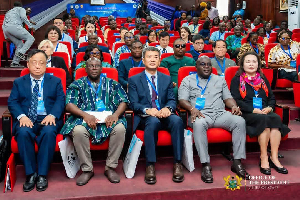
President John Dramani Mahama has called on Ghana and other West African countries to pursue a people-centred digital transformation agenda, insisting that technology must translate into better living conditions, wider economic opportunities and more accessible public services.
The President’s position was communicated by the Chief of Staff, Dr Julius Debrah, who represented him at the opening of the 8th International Symposium on West African Studies (ISWAS) on November 16, 2026.
The symposium, held under the theme, “New Quality Productive Forces for West African Digital Governance Transformation and Sustainability,” brought together academics, researchers, policymakers and development experts to examine how technology, research and innovation could support governance and sustainable development in the sub-region.
Dr Debrah said the success of digital transformation should not be measured simply by the number of computers, digital platforms or technological infrastructure acquired by governments, but by the practical improvements those investments bring to people’s daily lives.
He stressed that technology must have a human face by helping citizens overcome difficulties, creating opportunities and making public services faster, fairer and easier to access.
The Chief of Staff called for stronger collaboration between governments, universities, researchers and the private sector to ensure that digital innovation responds to the real needs of citizens and contributes to economic development.
Ghana-China cooperation in focus
Dr Debrah also highlighted the importance of strengthening cooperation between Ghana and China in research, technology transfer, industrial development and digital public governance.
He said universities and research institutions had a critical role to play in building the knowledge, skills and innovations required to accelerate the digital transformation of Ghana and the wider West African region.
He welcomed the establishment of the Centre for West African Studies for Digital Public Governance and the proposed China-Ghana Key Research Laboratory, describing them as important platforms for academic collaboration, local production, job creation and stronger public institutions.
The initiatives are expected to deepen cooperation between Ghanaian and Chinese institutions, encourage the exchange of expertise and support research into technology-driven solutions to development challenges.
Dr Debrah said the partnership was particularly relevant to Ghana’s Resetting Ghana Agenda, the 24-Hour Economy policy and the Big Push infrastructure programme.
He noted that Ghana’s diplomatic and economic relationship with China, which dates back to 1960, provided a foundation for expanding cooperation in areas capable of accelerating industrialisation and technological advancement.
He urged participants to ensure that the ideas and recommendations emerging from the symposium were translated into practical projects and policies rather than remaining at the level of academic discussions.
Ghana’s digital transformation agenda
The call comes as the Mahama administration pursues several digital initiatives intended to improve public-sector efficiency, expand access to technology and prepare young people for employment in the digital economy.
One of the major interventions is the One Million Coders Programme, launched in March 2025, which seeks to equip one million Ghanaians with digital skills over four years.
The programme covers areas including coding, data analytics, cybersecurity, artificial intelligence and other emerging technologies.
At a ministerial roundtable in Doha, Qatar, on November 9, 2026, Minister for Communication, Digital Technology and Innovations Samuel Nartey George outlined further plans to expand Ghana’s digital public services.
These include upgrading the Ghana.gov platform into a single, integrated gateway through which citizens can access government services and establishing a National Data Exchange to connect 48 government data registries.
The government says the data exchange will improve information-sharing among public institutions, reduce duplication and support more coordinated service delivery.
The minister also disclosed that 11 universities had begun incorporating certification from the One Million Coders Programme into their academic programmes, strengthening the link between formal education and industry-relevant digital skills.
Artificial intelligence and digital inclusion
Another major component of Ghana’s digital agenda is the National Artificial Intelligence Strategy 2025–2035, launched by President Mahama in April 2026.
The strategy is intended to guide the responsible development and adoption of artificial intelligence across sectors such as healthcare, agriculture, education, finance and public administration.
At its launch, President Mahama said Ghana must move beyond being a consumer of technologies developed elsewhere and build the capacity to design, govern and deploy its own AI solutions.
The strategy places emphasis on digital infrastructure, data governance, skills development, ethical AI, research and innovation.
The President has also stressed the need to ensure that artificial intelligence reflects Ghana’s cultural and linguistic diversity, so that the benefits of the technology are not restricted to people who speak major international languages.
Digital inclusion remains another challenge, particularly for communities with limited internet connectivity, inadequate infrastructure and insufficient access to digital devices.
In his 2026 State of the Nation Address, President Mahama reported that 1,561 of the 2,016 cell sites targeted under the Rural Telephony and Digital Inclusion Project had been constructed, with 1,144 activated at the time of the address.
The project is intended to extend voice and data connectivity to underserved communities, providing a foundation for wider participation in digital services, education and business.
Research institutions urged to influence policy
The symposium’s emphasis on research and academic cooperation builds on earlier efforts to establish institutions capable of supporting digital governance in West Africa.
In June 2026, Dr Debrah urged the Ghana Institute of Management and Public Administration (GIMPA) and its partners to use research and innovation to strengthen governance and digital transformation across the sub-region.
The call was made at the inauguration of the Centre for West African Studies for Digital Public Governance, established through a partnership involving GIMPA and China’s University of Electronic Science and Technology.
At the event, GIMPA Rector Professor Samuel Kwaku Bonsu said the centre would help collect and analyse governance data to support evidence-based decision-making by governments and other institutions.
A memorandum of understanding was also signed to establish a Digital Public Governance Hub at GIMPA, intended to serve as a platform for research, data analysis and policy development.
Dr Debrah said the work of such institutions must influence public policy, parliamentary deliberations and development planning across West Africa.
The challenge of turning digital ambitions into results
Despite the growing interest in digital transformation, countries across West Africa continue to face challenges involving infrastructure, affordability, cybersecurity, digital literacy, data protection and unequal access to technology.
The rapid expansion of artificial intelligence also raises questions about privacy, misinformation, job displacement, algorithmic bias and the protection of citizens’ personal information.
For Ghana, the challenge will be to ensure that digital investments produce measurable benefits for citizens, particularly rural communities, small businesses, students and people who have limited access to technology.
The government’s plans to integrate public databases and expand online services will also require strong safeguards to protect personal information and maintain public confidence.
Dr Debrah’s message at the symposium was therefore a reminder that technological advancement must go hand in hand with inclusive policies, responsible governance and investment in human capacity.
He urged participants to use the symposium as a platform for developing practical solutions that could strengthen institutions, expand economic opportunities and improve the delivery of public services across West Africa.
The broader ambition, he said, should be to position the sub-region not merely as a consumer of imported digital technologies but as a producer of knowledge, innovation and home-grown solutions capable of addressing its development needs.
Get the AfroAsia Media newsletter
The day's top stories from Africa and Asia, straight to your inbox.
Comments
0 comments
Loading…