
Ike Casillas reveals Spain’s golden era struck fear into rivals: ‘You could see fear in their eyes’
Iker Casillas, the legendary goalkeeper who captained Spain to an unprecedented treble of major international titles, has opened up about the psychological dominance his side wielded during their golden years between 2008 and 2012 – claiming that opponents were visibly intimidated before a ball was even kicked. In a candid interview, the 45-year-old former Real…
Published 4 min read
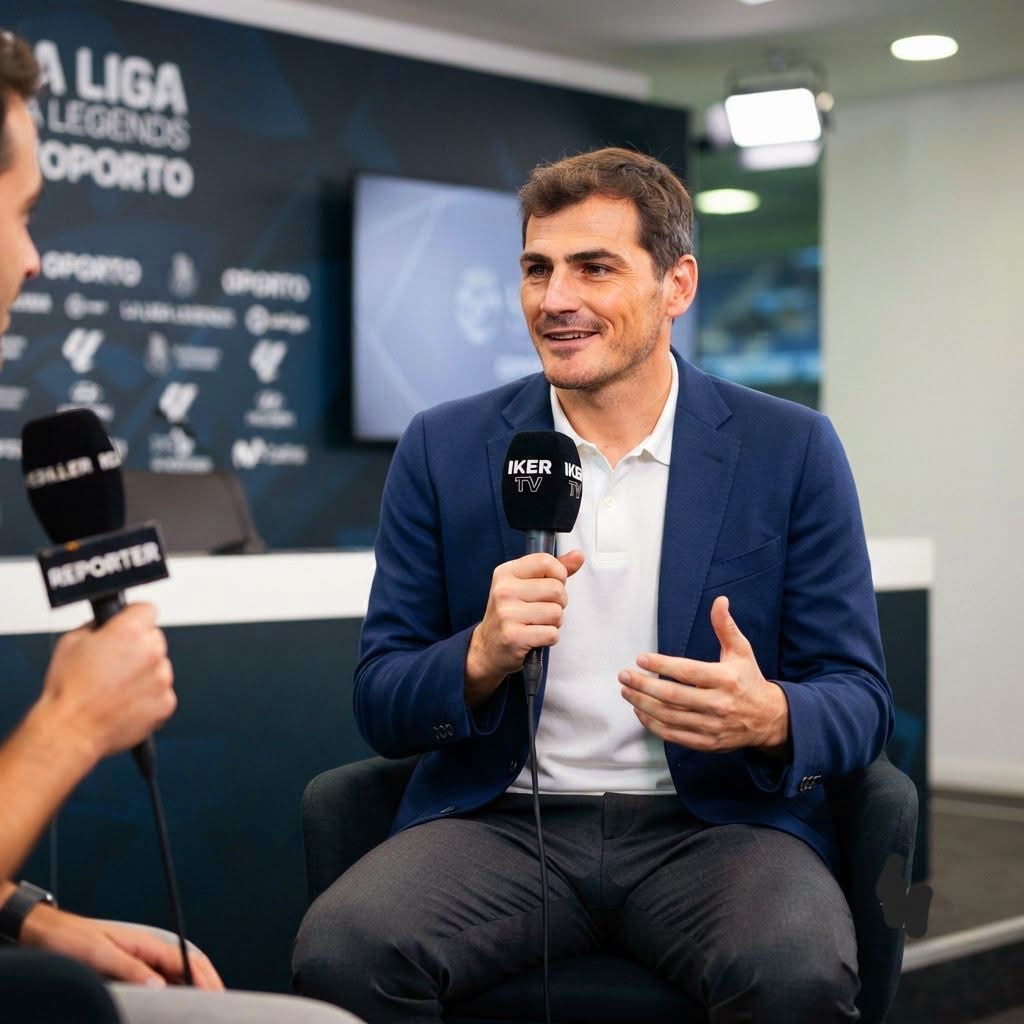
Iker Casillas, the legendary goalkeeper who captained Spain to an unprecedented treble of major international titles, has opened up about the psychological dominance his side wielded during their golden years between 2008 and 2012 – claiming that opponents were visibly intimidated before a ball was even kicked.
In a candid interview, the 45-year-old former Real Madrid and Porto shot-stopper reflected on a run of success that saw Spain lift EURO 2008, the 2010 FIFA World Cup, and EURO 2012 – a feat no national team had ever achieved before or since.
“We achieved something no national team had ever done before – and we did it while playing incredible football,” Casillas said. “We faced France, Portugal, the Netherlands, England, Germany… and in the stadium corridors, you could see fear in their eyes. We could feel it.”
Casillas’s words offer a rare glimpse into the aura surrounding Vicente del Bosque’s and Luis Aragonés’s squads, who redefined international football with their trademark tiki-taka – a possession-based, pass-heavy philosophy that suffocated opponents and turned games into chess matches Spain always seemed to win.
The Dynasty, By the Numbers
Spain’s golden era began in Vienna on June 29, 2008, when Fernando Torres’s stunning first-half strike defeated Germany 1-0 in the EURO final – ending 44 years of major tournament heartbreak. That victory was no fluke; La Roja had already dismantled Russia 3-0 in the semi-finals and edged past Italy on penalties in the quarter-finals, signaling a new tactical order.
Two years later, in Johannesburg, Casillas himself produced a heroic last-ditch save with his foot to deny Arjen Robben’s one-on-one in the World Cup final against the Netherlands, before Andrés Iniesta’s extra-time volley secured a 1-0 victory and Spain’s first-ever world crown. The image of Casillas weeping into his gloves as he lifted the golden trophy remains etched in football folklore.
By 2012, Spain had become the first team to retain the European Championship, thrashing Italy 4-0 in the final – the biggest margin of victory in a EURO final – with goals from David Silva, Jordi Alba, Fernando Torres, and Juan Mata. That tournament also saw Spain eliminate France in the quarter-finals and Portugal on penalties in the semis, both of whom Casillas now says arrived at those matches already beaten mentally.
‘We Could Feel Their Doubt’
Casillas elaborated on the psychological edge his side carried into every big knockout tie. “It wasn’t arrogance – it was certainty,” he explained. “When we walked out of the tunnel, we knew exactly what we were going to do. But when we looked across at the opposition, we saw them looking at each other, hesitating. Even the great teams – Germany, England, the Netherlands – they respected us so much that they almost feared us. And fear, in football, is half the battle.”
The Spain captain, who earned 167 caps, also paid tribute to the midfield engine room of Xavi Hernández, Andrés Iniesta, Xabi Alonso, and Sergio Busquets – a quartet that controlled games with almost mathematical precision. “We had the ball, and when you have the ball, the other team can’t score. But more than that, they can’t breathe. They chase shadows for 90 minutes. By extra time, they were exhausted mentally and physically.”
A Legacy That Stands Alone
While Spain’s dominance faded after 2012 – with early exits in the 2014 World Cup and 2016 EURO – no team has since matched their run of three consecutive major trophies. France won the 2018 World Cup and 2022 World Cup runner-up, but couldn’t string together back-to-back Euros. Argentina’s recent Copa América and World Cup double is impressive, but still falls short of Spain’s trio.
Casillas, now a football ambassador and occasional pundit, concluded with a note of pride: “We didn’t just win – we won beautifully. People still talk about our passing, our movement, our goals. But what they don’t always talk about is the mental grip we had on every opponent. That fear in the corridors? That was our real victory before the whistle even blew.”
As Spain’s current generation – led by young stars like Pedri and Gavi – attempts to recapture that glory at the 2026 World Cup, Casillas’s words serve as both a reminder of a golden past and a benchmark for what true dominance looks like on the biggest stage.
Get the AfroAsia Media newsletter
The day's top stories from Africa and Asia, straight to your inbox.




Comments
0 comments
Loading…