
‘I sold four truckloads of cement daily’ – Dangote recounts humble beginnings of business empire
African business magnate Aliko Dangote has recounted how he built his business empire from humble beginnings, revealing that he started his entrepreneurial journey in 1978 by selling just four…
Journalist
Published 5 min read
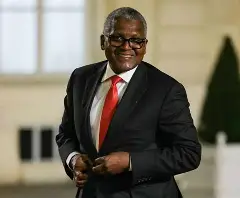
African business magnate Aliko Dangote has recounted how he built his business empire from humble beginnings, revealing that he started his entrepreneurial journey in 1978 by selling just four truckloads of cement a day and making between 6,000 and 7,000 naira in daily profit.
The Nigerian billionaire said the earnings were substantial at the time, providing him with financial comfort and enabling him to purchase his first Mercedes-Benz for 5,100 naira in the same year.
Speaking at the Invest Ghana Summit, Mr Dangote reflected on the early stages of his business career, explaining how a relatively small cement trading operation laid the foundation for what would eventually become one of Africa’s largest industrial conglomerates.
“I started by buying and selling just four truckloads of cement every day. After selling them, I was a very happy man. I would go home and sleep,” he recalled.
He explained that the cement business was particularly profitable because Nigeria was experiencing a shortage of the commodity, creating strong demand and opportunities for traders who could secure supplies.
According to him, customers were sometimes willing to make advance payments and wait several months before collecting their cement because of the scarcity in the market.
He recalled that some buyers would deposit money with his business and return to Lagos six months later to take delivery of their orders.
Mr Dangote said the profits he generated from the business were significant when measured against the prevailing cost of living and the price of luxury goods at the time.
“6,000, 7,000 naira at that time was big money, because I was telling people that I bought my first Mercedes in 1978 for 5,100 naira,” he said.
From cement trading to an industrial empire
Mr Dangote’s early experience in commodity trading became the starting point of a business journey that transformed him into one of Africa’s most influential industrialists.
Born in Kano, Nigeria, in 1957, he came from a prominent business family and developed an interest in commerce at an early age.
He began his business activities in the late 1970s, initially trading in commodities such as sugar, rice and cement before expanding into manufacturing.
The Dangote Group, which he established, has since grown into a diversified conglomerate with operations spanning cement production, fertiliser, sugar, salt, food processing, oil refining and other industrial activities.
One of its most significant investments is the Dangote Petroleum Refinery in Lagos, a major industrial project designed to strengthen Nigeria’s domestic refining capacity and reduce reliance on imported petroleum products.
The refinery, with an installed capacity of 650,000 barrels per day, represents a major shift in the group’s strategy from commodity trading towards large-scale industrial production.
The group has also established cement manufacturing operations across several African countries, making it a major player in the continent’s construction and infrastructure sectors.
Dangote laments depreciation of the naira
Beyond recounting his entrepreneurial beginnings, the billionaire used the summit to express concern about the long-term depreciation of the Nigerian naira, arguing that the country’s failure to sustain industrial development had contributed to the weakening of its currency.
He said Nigeria could have achieved a stronger economic position if successive governments and businesses had maintained a consistent commitment to establishing industries, producing locally and reducing dependence on imported goods.
According to him, a stronger manufacturing base would have helped reduce demand for foreign exchange, support domestic production and limit pressure on the naira.
“If we had continued at that time setting up industries, producing what we consume and all these things, then actually the rate of exchange wouldn’t have moved to 1,350,” he said.
His comments reflect longstanding concerns about Nigeria’s dependence on imported products, particularly manufactured goods, machinery and industrial inputs.
Nigeria’s foreign exchange market has experienced significant volatility in recent years, with the naira losing substantial value against major international currencies.
The depreciation has increased the cost of importing raw materials, machinery, petroleum products and other essential commodities, placing additional pressure on businesses and households.
Industrialisation key to Africa’s economic growth
Mr Dangote’s remarks also highlighted the importance of industrialisation in strengthening African economies and creating sustainable economic opportunities.
He argued that countries on the continent must move beyond exporting raw materials and importing finished products if they are to achieve long-term economic stability.
For him, building local industries would not only create employment and expand economic opportunities but also strengthen national currencies by reducing dependence on foreign goods and imported products.
His argument comes at a time when several African economies are pursuing policies aimed at expanding domestic manufacturing, improving infrastructure and attracting private-sector investment.
In Ghana, for instance, the drive towards industrialisation has featured prominently in government economic programmes, including efforts to expand agro-processing, strengthen local manufacturing and reduce dependence on imports.
The African Continental Free Trade Area (AfCFTA), headquartered in Accra, also provides an opportunity for businesses to expand production and access larger markets across the continent.
Mr Dangote’s business journey, from selling four truckloads of cement daily to building a multinational industrial group, illustrates how identifying market gaps, reinvesting profits and expanding into manufacturing can create opportunities for long-term business growth.
His central message at the Invest Ghana Summit was that Africa’s economic future would depend significantly on its ability to produce more of what it consumes, develop competitive industries and harness its resources to create value locally.
Get the AfroAsia Media newsletter
The day's top stories from Africa and Asia, straight to your inbox.
Comments
0 comments
Loading…