
GSA Engages VRA, GRIDCo to Roll Out Nationwide Electricity Meter Testing
The Ghana Standards Authority (GSA) has begun technical consultations with the Volta River Authority (VRA) and the Ghana Grid Company (GRIDCo) ahead of the rollout of a National Electricity Meter…
Journalist
Published 4 min read
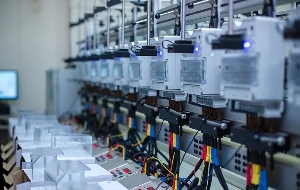
The Ghana Standards Authority (GSA) has begun technical consultations with the Volta River Authority (VRA) and the Ghana Grid Company (GRIDCo) ahead of the rollout of a National Electricity Meter Testing Programme, a flagship initiative designed to verify the accuracy of every electricity meter in the country and restore consumer confidence in billing.
The engagement, held on Monday, November 16, 2026, brought together technical representatives of the two state-owned energy giants at the GSA’s offices in Accra. The meeting was chaired by the GSA’s Director of Metrology, Evans Asiedu, on behalf of the Director-General, Professor George Agyei.
A Programme Rooted in Law
The National Electricity Meter Testing Programme (NEMTP) is being implemented under the Standards Authority Act, 2022 (Act 1078), which designates the GSA as Ghana’s National Metrology Institute and empowers it to regulate measuring instruments used in commerce and trade. Regulation 24 of the Public Utilities Regulatory Commission (Consumer Service) Regulations, 2020 (LI 2413) specifically mandates the GSA to approve any meter required for use by a public utility and subject it to testing and certification requirements.
The programme is funded through a GSA Meter-Testing Service Charge approved by the Public Utilities Regulatory Commission (PURC), embedded within GRIDCo’s 2026–2030 Transmission Service Charge. The service is free to the public.
What the Programme Entails
Under the NEMTP, every electricity meter in Ghana—single-phase, three-phase, transformer-operated, high-tension and low-tension, postpaid, prepaid and smart meters—is classified as a regulated measuring instrument. This applies irrespective of ownership or billing arrangement, and includes sub-meters used by landlords and estate developers to apportion energy costs, as well as bulk-supply and check meters.
Every meter already installed and in service must be submitted for testing, verification and certification by December 31, 2028, in accordance with a phased submission schedule to be issued by the Authority. Installing or using an uncertified meter constitutes an offence under Act 1078, carrying administrative penalties of up to 1,000 penalty units, while more serious infractions—such as forging verification stamps or knowingly using an unjust meter—attract fines of up to 4,000 penalty units, imprisonment of up to four years, or both.
The GSA established Ghana’s first independent electricity meter testing laboratory in December 2023, positioning the Authority to carry out the technical verification work at scale.
Why VRA and GRIDCo Matter
The involvement of VRA and GRIDCo is central to the programme’s success. VRA is Ghana’s principal electricity generator, while GRIDCo operates the national transmission grid. Technical coordination between the generation and transmission segments is essential to ensuring that meters measuring bulk supply and grid transactions are accurate, and that the programme’s coverage extends across the entire electricity value chain, not just at the distribution level.
The meeting provided the stakeholders with an opportunity to better understand the programme’s objectives, examine its implementation requirements, and offer technical input to guide its rollout. Further details on implementation, coverage and timeline have not yet been announced.
A Response to Billing Controversies
The NEMTP did not emerge in a vacuum. In early 2026, the Electricity Company of Ghana (ECG) faced a wave of public complaints over unusually high prepaid power consumption. In response, ECG formally requested the GSA to conduct independent, random testing of meters both in the laboratory and in the field, while insisting that all meters deployed nationwide undergo rigorous testing and calibration before installation. ECG also launched a nationwide meter audit exercise in October 2026 to reduce commercial losses and combat electricity theft.
Those developments exposed a credibility gap: consumers were being asked to trust meters whose accuracy they had little independent means of verifying. The NEMTP is designed to close that gap by placing verification in the hands of the national metrology authority, backed by a public education and consumer-confidence campaign.
The GSA has also warned landlords and developers that uncertified sub-meters—often used to resell electricity to tenants—must be submitted for testing by the same 2028 deadline, signalling that the programme’s reach extends beyond the formal utility sector.
What Happens Next
With VRA and GRIDCo now engaged, the GSA is expected to finalise the phased submission schedule and begin public sensitisation ahead of the certification rollout. For a country where electricity billing disputes have repeatedly flared into public controversy, the programme represents a significant institutional attempt to replace suspicion with verifiable standards—and to ensure that the meter on the wall is, at last, a trusted instrument.
Get the AfroAsia Media newsletter
The day's top stories from Africa and Asia, straight to your inbox.
Comments
0 comments
Loading…