
Government accepts five-year presidential term, 35-year age limit — Attorney-General
The Attorney-General and Minister for Justice, Mr Godfred Yeboah Dame, has announced that the Government has formally accepted the Constitutional Review Committee’s recommendation to extend the presidential term from four to five years and reduce the minimum eligible age for presidential candidates from 40 to 35 years. Mr Dame made the announcement yesterday at a…
Published 4 min read
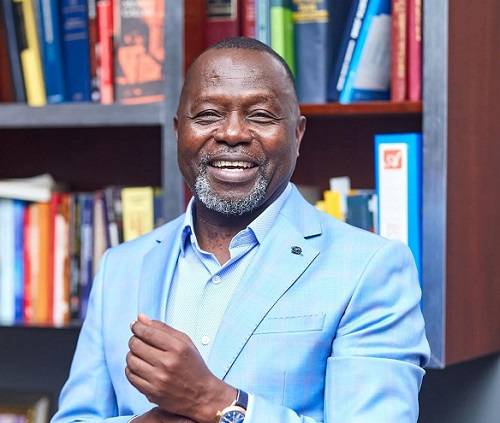
The Attorney-General and Minister for Justice, Mr Godfred Yeboah Dame, has announced that the Government has formally accepted the Constitutional Review Committee’s recommendation to extend the presidential term from four to five years and reduce the minimum eligible age for presidential candidates from 40 to 35 years.
Mr Dame made the announcement yesterday at a press briefing in Accra, confirming that Cabinet had concluded deliberations on the government’s position paper on the Constitutional Review Committee’s report and had given its full backing to the key proposals.
Background to the constitutional review
President John Dramani Mahama established the eight-member Constitutional Review Committee in January 2025 under the chairmanship of Professor Henry Kwasi Prempeh. The Committee was tasked with identifying key areas of the 1992 Constitution that needed updating to align with the country’s evolving democratic and socio-economic realities.
After 11 months of extensive consultations with citizens, institutions and stakeholders across the country, the Committee submitted its final report to the President on December 22, 2025. President Mahama described the report as “a beautiful Christmas gift” and directed its publication and release to the public.
Key recommendations accepted
Presenting the government’s position, the Attorney-General confirmed acceptance of two major constitutional amendments:
Five-year presidential term
The Committee had argued that the current four-year tenure was too short for effective governance, noting that presidents spend about six months setting up and another year campaigning, leaving limited time for actual governance. Professor Prempeh observed that the emerging global standard for presidential tenure is five years, and that in the West African sub-region, Ghana and Nigeria have the lowest terms at four years.
The Committee also proposed a defined campaign season to prevent the current situation where the country runs “24-hour, 24-seven, four-year campaigns”. Under the proposal, political parties and candidates would be restricted from electioneering activities such as rallies, posters and billboards outside a specified campaign period.
The two-term limit under Article 66(2) of the 1992 Constitution, which states that “a person shall not be elected to hold office as President of Ghana for more than two terms”, remains unchanged. The Committee explicitly ruled out any provision for a third term.
Reduction of presidential age limit
On the age requirement, the Attorney-General confirmed that the government had accepted the recommendation to amend Article 62(b) of the 1992 Constitution to reduce the minimum age for presidential candidates from 40 to 35 years.
The Committee had originally proposed lowering the age to 30 years, arguing that maturity and competence are not strictly determined by age, and that voters can judge whether a younger candidate has accomplished enough to merit their support. However, following extensive public consultations and stakeholder engagements, the government settled on 35 years as a compromise position.
Proponents of the reduction argue that it reflects Ghana’s demographic reality — a young country governed mainly by older elites — and would widen political participation. A recent Global InfoAnalytics poll found that 55 per cent of voters favour reducing the age threshold.
Exception for incumbent President
For the avoidance of doubt, the Attorney-General emphasised that the proposed amendments would not apply to the incumbent President, John Dramani Mahama. The constitutional changes would take effect from the next presidential election cycle, ensuring that the current President completes his term under the existing constitutional provisions.
This clarification follows recent public debates and legal suits regarding presidential term limits. Legal practitioners, including former Chief of Staff Nana Ato Dadzie, have insisted that the Constitution clearly limits a president to two terms in office.
Other reforms under consideration
Beyond the presidential term and age limit, the Constitutional Review Committee made several other far-reaching proposals which the government is also considering.
These include separating ministerial appointments from parliamentary membership, establishing an independent Emoluments Commission, and reforming the appointment process for Metropolitan, Municipal and District Chief Executives (MMDCEs).
The Committee also recommended the election of MMDCEs, the inclusion of traditional chiefs in local government structures, the creation of a Devolution Commission, expanded authority for the Council of State, and the establishment of a new anti-corruption commission to consolidate prosecution functions currently spread across several agencies.
Implementation path
The Attorney-General stated that the government would now engage Parliament to begin the legislative process for the constitutional amendments. Given that the proposed changes affect entrenched provisions of the 1992 Constitution, they will require approval through a national referendum.
President Mahama had earlier announced plans to set up a Constitutional Review Implementation Committee early in 2026 to oversee the transition from the review process to implementation. The President acknowledged that some of the proposals were far-reaching but said they were needed to strengthen Ghana’s democratic order, especially at a time when constitutional governance in parts of the sub-region was under strain.
Vice President Professor Jane Naana Opoku-Agyemang recently described constitutional reform as “a national exercise in reflection” on whether institutions continue to serve the aspirations of citizens and respond to the needs of an evolving society. She emphasised that the process would be approached in a spirit of partnership to “strengthen public confidence, deepen democratic accountability, and preserve the delicate balance upon which our constitutional order rests”.
Get the AfroAsia Media newsletter
The day's top stories from Africa and Asia, straight to your inbox.




Comments
0 comments
Loading…