
China injects $54 billion into state banks and insurers to shore up financial system amid slowing growth
China is pumping 360 billion yuan (about $53.6–54 billion) into eight major state-owned banks and insurance companies in a coordinated capital injection led by the Ministry of Finance, state media and company filings confirmed over the weekend. The move, announced Sunday through statements from the institutions and reported by the official Xinhua News Agency, aims…
Published 5 min read
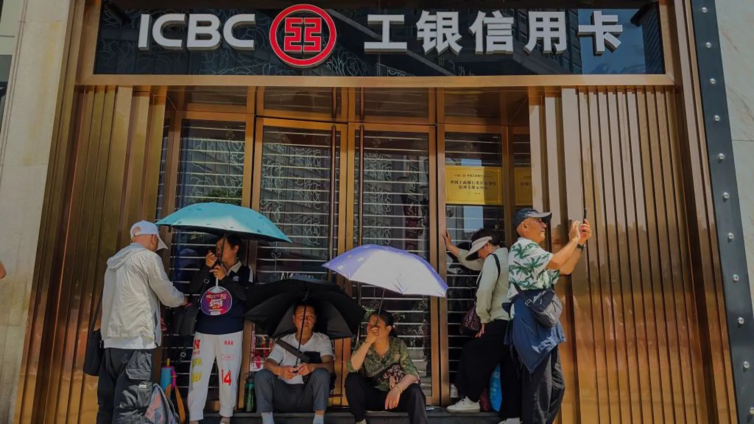
China is pumping 360 billion yuan (about $53.6–54 billion) into eight major state-owned banks and insurance companies in a coordinated capital injection led by the Ministry of Finance, state media and company filings confirmed over the weekend.
The move, announced Sunday through statements from the institutions and reported by the official Xinhua News Agency, aims to bolster core capital buffers, strengthen risk resilience, and expand the capacity of these institutions to channel credit into the real economy as growth slows and external pressures mount.
The package is funded primarily by 300 billion yuan in special treasury bonds issued by the Finance Ministry, with the remaining roughly 60 billion yuan coming from share subscriptions by China National Tobacco Corporation and its subsidiaries. It marks an expansion of a recapitalization drive that began last year and now covers a wider range of state financial institutions.
Breakdown of the funding
Two of the country’s largest commercial banks will receive the bulk of the money through private placements of A-shares:
• Agricultural Bank of China plans to raise up to 160 billion yuan.
• Industrial and Commercial Bank of China (ICBC), the world’s largest bank by assets, aims for up to 100 billion yuan.
The Finance Ministry will subscribe to the majority of these shares (130 billion yuan for Agricultural Bank and 70 billion yuan for ICBC), with China National Tobacco and related entities covering the balance. All proceeds are earmarked to replenish core Tier-1 capital, the highest-quality buffer against losses.
Policy-oriented institutions will also benefit:
• The Export-Import Bank of China is set to receive a direct 30 billion yuan injection.
• China Export & Credit Insurance Corporation (Sinosure) will get 10 billion yuan.
On the insurance side, five major groups will share about 70 billion yuan:
• China Life Insurance (Group) — 35 billion yuan.
• People’s Insurance Company of China (PICC) — up to 15 billion yuan via private placement.
• China Taiping Insurance Group — 7 billion yuan.
• China Reinsurance (Group) — 3 billion yuan.
This is the first major capital boost for the insurance sector from the Finance Ministry in roughly two decades. Low interest rates have compressed banks’ net interest margins and eroded insurers’ investment returns and solvency ratios, making organic capital generation more difficult.
Broader economic backdrop
The injection comes as China’s economy faces a combination of structural and cyclical challenges. Official data showed second-quarter GDP growth slowing to 4.3 percent year-on-year, down from 5 percent in the first quarter and below Beijing’s full-year target range of 4.5–5 percent — the lowest annual goal since 1991. First-half growth stood at 4.7 percent.
A multi-year property market downturn continues to weigh heavily. Real estate development investment fell about 18 percent in the first half of 2026, while fixed-asset investment overall contracted. Domestic demand and consumption remain subdued, even as high-tech manufacturing and exports (particularly in electric vehicles, batteries, and AI-related products) have shown resilience.
Persistent low interest rates have squeezed profitability across the financial sector. Analysts also point to ongoing trade and technology frictions with the United States and other Western economies, an aging population that is shrinking the workforce, and the lingering effects of elevated energy costs linked to the Iran conflict earlier in the year. Although China mitigated the oil shock by drawing on large strategic reserves and sharply reducing imports, higher energy prices still contributed to domestic pressures.
President Xi Jinping has repeatedly framed financial stability as a matter of national security. State media described the latest capital support as enhancing the institutions’ “sound operating capabilities, risk resistance capabilities, and ability to serve the real economy.”
Continuity with earlier measures
The current package builds directly on a larger 2025 recapitalization in which four other big state banks — Bank of China, China Construction Bank, Bank of Communications, and Postal Savings Bank of China — raised a combined 520 billion yuan, largely backed by 500 billion yuan in special treasury bonds from the Finance Ministry. With Agricultural Bank and ICBC now included, all six major state-owned commercial banks have received fiscal capital support under the two rounds.
This year’s plan was originally expected to focus mainly on the remaining commercial banks but was broadened to include insurers and key policy lenders that support trade and exports. Analysts described the inclusion of insurers as a notable shift toward a more comprehensive “full-spectrum” approach to reinforcing the state-backed financial system.
Market and expert reaction
While the injection is viewed as a constructive step for capital adequacy and lending capacity, some observers caution that it may not be sufficient on its own to revive weak credit demand. Loan growth has remained soft amid tepid investment appetite and the ongoing property adjustment. Stronger fiscal measures and efforts to boost household confidence and private-sector activity are still seen as necessary by many economists.
Shares of some of the recipient institutions declined following the announcements, reflecting mixed market sentiment about the scale of support relative to the challenges and potential dilution effects from the share placements.
The Finance Ministry and the institutions involved emphasized that the capital will help the firms better withstand external shocks and continue supporting national economic priorities. The special bond issuance is expected to proceed in the near term, with the share placements subject to regulatory approvals.
This latest move underscores Beijing’s preference for targeted, state-directed capital support over broader stimulus as it navigates a period of slower growth and structural transition.
Get the AfroAsia Media newsletter
The day's top stories from Africa and Asia, straight to your inbox.




Comments
0 comments
Loading…