
Anger mounts in Iran as businesses forced to fund Khamenei’s week-long funeral
More than four months after the death of former Supreme Leader Ayatollah Ali Khamenei, Iran has begun a week-long funeral ceremony that authorities say will conclude with his burial on July 9. But across the country, the event has ignited widespread anger, with Iranians describing a systematic campaign of coercion in which businesses and state…
Published 5 min read
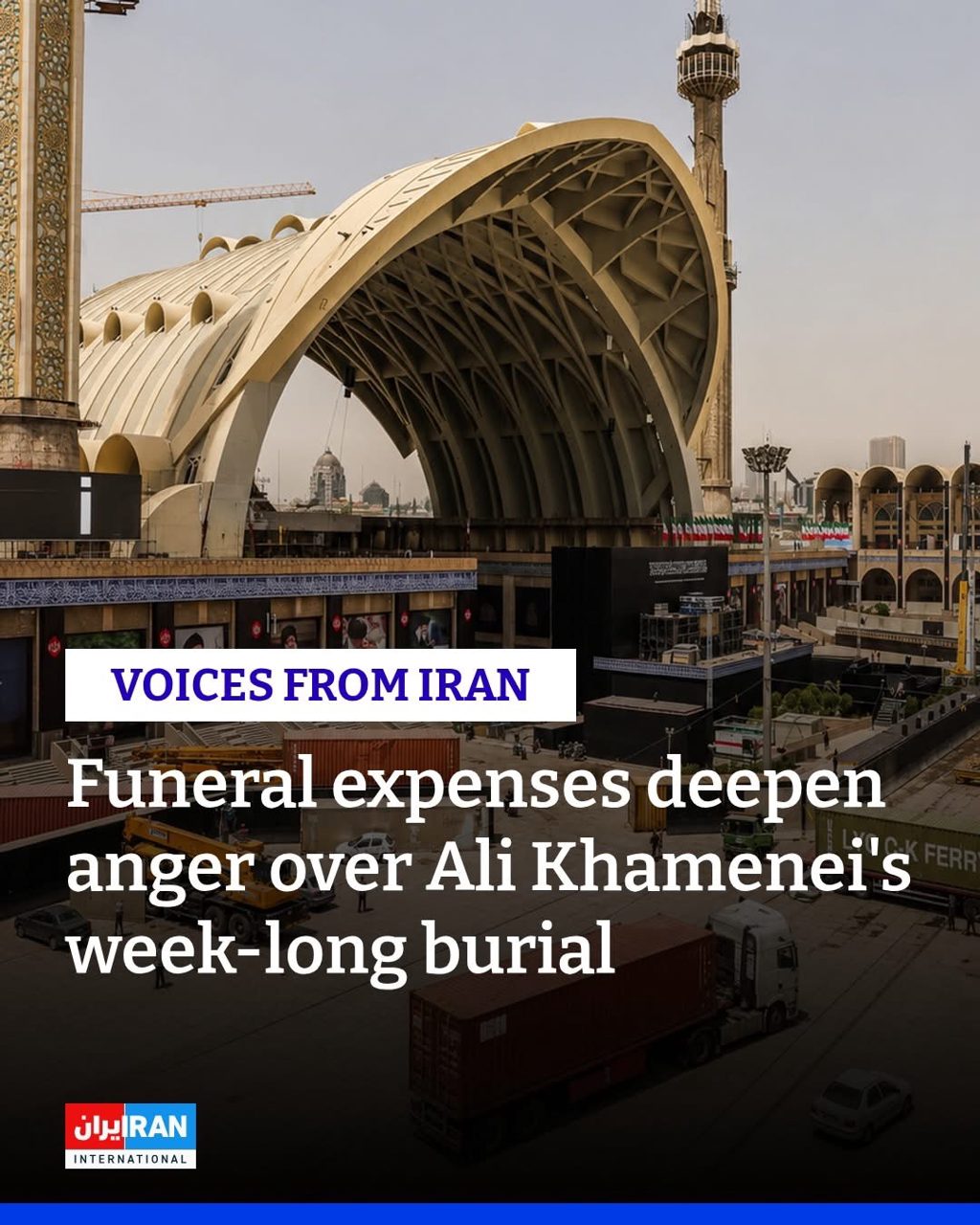
More than four months after the death of former Supreme Leader Ayatollah Ali Khamenei, Iran has begun a week-long funeral ceremony that authorities say will conclude with his burial on July 9. But across the country, the event has ignited widespread anger, with Iranians describing a systematic campaign of coercion in which businesses and state employees are being forced to fund, staff and attend the proceedings.
Khamenei, 86, was killed on February 28 in joint U.S.-Israeli airstrikes on his compound in Tehran. His death came in the opening hours of a war with Israel and the United States that dragged on for months. Officials have attributed the extraordinary delay in his burial — which violates Islamic tradition requiring interment within 24 hours — to active wartime conditions and security concerns. An interim peace deal signed with the United States last month finally provided the stability needed to coordinate a massive public gathering.
Iranian authorities are now projecting a crowd of 15 to 20 million people for the ceremonies in Tehran alone — a figure that would surpass the 10 million estimated at the funeral of Ayatollah Ruhollah Khomeini in 1989. But accounts collected from citizens across the country suggest the regime is not leaving that turnout to chance.
‘A government order for all organisations’
In messages sent to Iran International, Iranians have described a broad campaign to mobilise resources for the funeral. Businesses in Semnan’s industrial zone have been instructed to finance roadside service stations for mourners. “They forced companies in the industrial zone to set up booths and provide soup, tea, juice and dates at their own expense,” one person wrote. “This is a government order for all organisations”.
In Tehran, companies have been compelled to contribute large sums. “The Islamic Republic and the Revolutionary Guards have forced all companies in Tehran to pay for booths and food for the funeral,” one message read. “More than 1,000 billion rials (over $570,000) has been taken from automobile manufacturers, while workers are struggling to make ends meet”.
Workers ordered to attend
Public-sector employees across the country have been ordered to attend official ceremonies, with leave cancelled and attendance made mandatory. One audio recording attributed to the human resources director of Tehran Municipality’s District 10 instructed all employees — including parents with young children and workers with serious medical conditions — to attend.
At Saipa, Iran’s second-largest automaker, employees were told overtime had been cancelled as company facilities were prepared to accommodate some 2,000 visitors from Iraq attending the funeral. The Hamshahri newspaper group, a municipality-linked outlet, was instructed to provide 200 employees for the ceremonies.
Some workers have been offered incentives. Employees of Iran’s Civil Registration Organisation said staff had been given 20 kilograms of rice each to participate. “But we are going to northern Iran instead (for fun),” one citizen told Iran International.
Businesses face closure if they refuse
Several messages said businesses had been warned to close during the ceremonies or face penalties. “We received a text message from the real estate union saying we are not allowed to open our office during the funeral days and must attend the ceremonies,” one Tehran resident wrote.
Another message said Basij members visited shops and warned owners that businesses opening during the mourning period would be sealed. “My parents are shopkeepers. Basij members told our shop and others nearby that if we open during the funeral days, the shop will be sealed,” a citizen said.
Gym owners have been ordered to close from Saturday through Wednesday, and Tehran’s Grand Bazaar has been ordered shut until Thursday. In Nahavand, local officials summoned charities and demanded they contribute to the funeral, warning that their work could be disrupted if they refused. Police and Basij members also visited restaurants in an industrial town near Tehran, warning owners they must prepare thousands of free meals for mourners or risk closure.
Economic hardship fuels backlash
The pressure has come at a time of acute economic suffering. According to independent estimates, the average monthly income in Iran is around $150 — well below a poverty line estimated at roughly $350 for a family.
“People are being destroyed by poverty and inflation, while those in power are spending the nation’s wealth on the funeral,” one person wrote. Another noted that bread prices had been raised before the ceremonies, even as authorities distributed free bread along procession routes to attract attendees.
“Free trains and hotels are available for their leader’s burial, but student food subsidies have been cut,” one student wrote. Others described Khamenei’s burial as symbolising the eventual end of the Islamic Republic, with a large number of messages urging people to wear bright-coloured clothing instead of black during the official mourning period.
Massive logistical operation
Official announcements indicate authorities are preparing a large-scale operation. The Basij Organisation for Guilds said 50 million loaves of bread were being prepared nationwide with the participation of bakers’ unions, while 16 mobile bakeries would be deployed across Tehran and surrounding areas.
Heightened security measures have been announced, including temporary airspace restrictions over Tehran and Mashhad during the ceremonies. Khamenei’s body has been preserved in refrigerated cold storage since his death, as Islamic law bars chemical embalming.
The funeral procession will begin in Tehran on July 4, continuing through the holy city of Qom on July 7 and the Iraqi cities of Najaf and Karbala, before Khamenei is laid to rest on July 9 at the Imam Ali Reza shrine in his birthplace of Mashhad. Delegations from more than 30 countries are expected to attend.
Iran’s new Supreme Leader, Mojtaba Khamenei — the former leader’s son — is unlikely to appear publicly at the funeral, with aides citing security concerns and active Israeli surveillance threats marking him “for death”. He has not been seen in public since his father’s killing.
— Reporting from Tehran
Get the AfroAsia Media newsletter
The day's top stories from Africa and Asia, straight to your inbox.




Comments
0 comments
Loading…