
41 clubs, one dream: The global talent map of the World Cup semi-finals
As the 2026 FIFA World Cup reaches its pulsating climax, the semi-final line-up of Argentina, England, France and Spain is not just a showcase of international football—it is a vivid tapestry of club football’s global reach. A total of 41 clubs across multiple continents have players represented in the final four, underlining how the world’s…
Published 3 min read
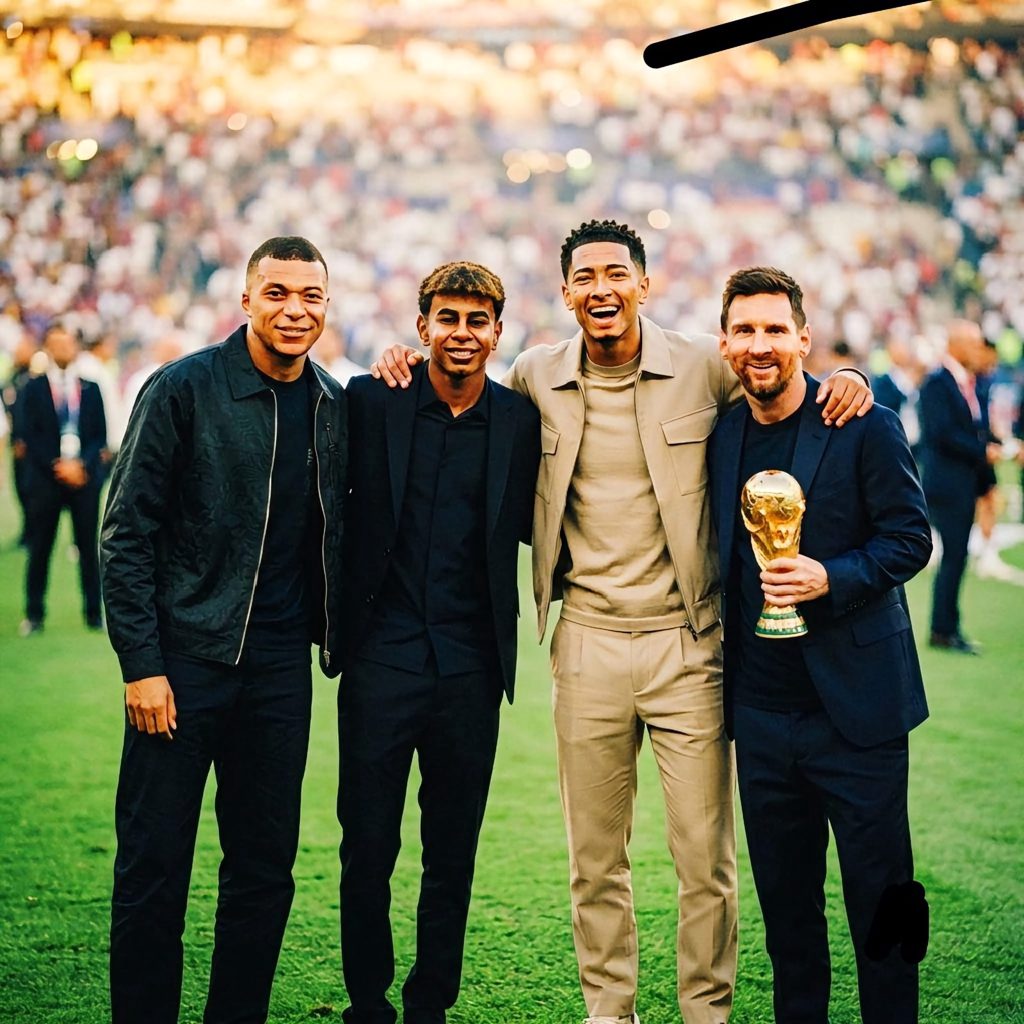
As the 2026 FIFA World Cup reaches its pulsating climax, the semi-final line-up of Argentina, England, France and Spain is not just a showcase of international football—it is a vivid tapestry of club football’s global reach. A total of 41 clubs across multiple continents have players represented in the final four, underlining how the world’s biggest tournament is powered by talent from every corner of the globe.
Barcelona leads the way
FC Barcelona tops the list with 10 players across the semi-finalist nations. Eight are in the Spain squad—Joan García, Pau Cubarsí, Eric García, Gavi, Pedri, Dani Olmo, Ferran Torres and Lamine Yamal. France’s Jules Koundé and England’s new signing Anthony Gordon complete the Blaugrana contingent.
This marks Barcelona’s highest-ever representation at this stage of a World Cup, surpassing their previous record of eight players in 2010 and 2018.
Atlético Madrid and Arsenal complete the podium
Atlético Madrid follows closely with nine players. Five are Argentinian—Julián Álvarez, Juan Musso, Giuliano Simeone, Thiago Almada and Nahuel Molina—while four represent Spain: Marcos Llorente, Marc Pubill, Álex Baena and Alejandro Grimaldo.
Arsenal ranks third with eight players: Spain’s David Raya, Mikel Merino and Martín Zubimendi; France’s William Saliba; and England’s Declan Rice, Bukayo Saka, Noni Madueke and Eberechi Eze.
Premier League dominance—with a twist
The Premier League is the most represented domestic competition, contributing 40 players—nearly 40% of the 104 semi-final squad members. However, a fascinating trend emerges: Premier League clubs supply the bulk of defensive talent.
Argentina’s Cristian Romero (Tottenham) and Lisandro Martínez (Manchester United); France’s William Saliba (Arsenal) and Lucas Digne (Aston Villa); and Spain’s Marc Cucurella (Chelsea) and Pedro Porro (Tottenham) all ply their trade in England. Almost 95% of England’s defensive minutes have been played by Premier League footballers.
Up front, it is a different story. France’s attacking trio of Désiré Doué, Kylian Mbappé and Ousmane Dembélé all play outside England. Spain’s front line features Atlético Madrid’s Álex Baena and Barcelona’s Lamine Yamal and Dani Olmo. Only one of England’s starting front four against Norway—Noni Madueke—will play in the Premier League next season.
La Liga is the second-best represented league with 29 players, while Ligue 1 contributes 13, Serie A seven and the Bundesliga five.
Full club breakdown
10 players
Barcelona
9 players
Atlético Madrid
8 players
Arsenal
7 players
Paris Saint-Germain
6 players
Manchester City
5 players
Aston Villa, Real Madrid
4 players
Crystal Palace
3 players
Athletic Club, Bayern Munich, Chelsea, Manchester United, Tottenham
2 players
AC Milan, Inter Milan, Inter Miami, Bayer Leverkusen, Liverpool, Marseille, Newcastle United
1 player each
Al Ahli, Al Hilal, AS Roma, Benfica, Real Betis, Boca Juniors, Bournemouth, Brentford, Celta Vigo, Como, Everton, Fenerbahçe, Juventus, Lens, Lyon, Monaco, Palmeiras, Real Sociedad, Rennes, River Plate, Strasbourg
A global celebration
From Saudi Arabia’s Al Ahli and Al Hilal to Argentina’s Boca Juniors and River Plate, from Brazil’s Palmeiras to Turkey’s Fenerbahçe, the semi-finals reflect football’s truly global nature. With 41 clubs represented and a World Cup final place at stake, the beautiful game has never felt more interconnected.
The dream continues. The world is watching.
Get the AfroAsia Media newsletter
The day's top stories from Africa and Asia, straight to your inbox.




Comments
0 comments
Loading…