
$1.7bn Gold Programme loss was accounting cost, not missing gold — Sagnarigu MP
Sagnarigu Member of Parliament Attah Issah has challenged the International Monetary Fund’s assessment that Ghana’s Domestic Gold Purchase Programme (DGPP) recorded losses exceeding $1.7 billion in 2025, arguing that the figure reflects accounting treatment rather than actual cash losses from failed transactions . Speaking on Eyewitness News, the MP acknowledged the government’s awareness of the…
Published 3 min read
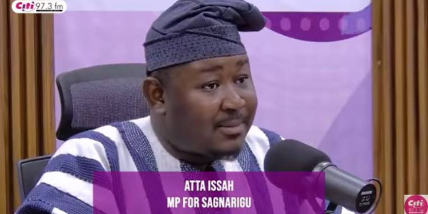
Sagnarigu Member of Parliament Attah Issah has challenged the International Monetary Fund’s assessment that Ghana’s Domestic Gold Purchase Programme (DGPP) recorded losses exceeding $1.7 billion in 2025, arguing that the figure reflects accounting treatment rather than actual cash losses from failed transactions .
Speaking on Eyewitness News, the MP acknowledged the government’s awareness of the IMF’s concerns but insisted the losses should not be interpreted as money lost through unsuccessful gold dealings .
“Let me say that as a government, I do acknowledge the concern raised by the IMF regarding the loss incurred under the Gold Purchase Programme. I am not in the business of disputing properly audited losses,” he said, adding, “but for an attempt to present a programme cost as profit, I will never do that.”
Exchange Rate Gap Drives Accounting Loss
Mr Issah explained that the IMF used a broader programme-cost methodology that included factors the Bank of Ghana does not classify as losses . He attributed much of the reported figure to exchange rate differences created by efforts to attract gold sellers and discourage smuggling.
“For example, premiums paid to purchase gold from aggregators and intermediaries. We were very clear that the exchange rate that you offer to attract people not smuggling gold outside, you have to pay them a different rate,” he explained .
The MP said the difference between the rate offered to gold aggregators and the Bank of Ghana’s official rate created what he described as an accounting loss rather than a technical or commercial loss .
Official data from the Bank of Ghana supports this interpretation. Head of Gold Management Paul Bleboo previously clarified that gold purchased from small-scale miners is paid for in cedis using the forex bureau rate—typically higher than the official rate—while the Bank records transactions at the official exchange rate, creating an inherent accounting gap . The Bank has stated that about 83% of the total programme cost comes from this exchange rate differential .
Programme Delivered Strategic Gains
Despite the accounting losses, the IMF’s report acknowledged significant contributions from the DGPP . Gold-related foreign exchange inflows increased from approximately $1.7 billion in 2023 to about $12.7 billion in 2025, and Ghana’s gross international reserves rose to $11.9 billion by end-2025, equivalent to about four months of import cover .
The Fund described the DGPP as “operationally central” to Ghana’s reserve accumulation, contributing to an eightfold increase in reserves and supporting a 41% nominal appreciation of the Cedi against the US dollar . The programme also helped formalise Ghana’s artisanal mining sector, bringing into the official economy gold previously lost to smuggling—estimated at about $11.4 billion between 2019 and 2024 .
Quasi-Fiscal Activity Concerns
Mr Issah, however, noted that the Bank of Ghana should not have managed the programme directly, arguing that its quasi-fiscal nature meant it ought to have been handled by the Ghana Gold Board . He cited the central bank’s already fragile balance sheet—negative equity of approximately GH¢51 billion in 2024, which widened further in 2025 .
“The Bank of Ghana shouldn’t have ventured into the gold purchase programme. It should have been left under the presidency of the Gold Board. So, this makes it a quasi-fiscal expenditure,” he said .
Reforms Underway
The government has since transitioned to the Ghana Accelerated National Reserve Accumulation Programme (GANRAP), implemented through the Ghana Gold Board, which now aims to purchase three tonnes of gold weekly and has reportedly reduced costs from about 16% to 7.25% . GoldBod now purchases gold at the interbank rate rather than the forex bureau rate, substantially reducing exchange rate losses .
Mr Issah maintained that the programme’s costs must be viewed within the broader objective of restoring economic stability. “There was cost attached to stabilisation. We were very clear from day one. The position should therefore not be reduced to just a line, ‘Ghana lost money by buying gold,'” he said .
Get the AfroAsia Media newsletter
The day's top stories from Africa and Asia, straight to your inbox.




Comments
0 comments
Loading…